NASA knows two heads are better than one, but what about hundreds?
Leveraging the power of crowdsourcing helps NASA find novel solutions to complex problems, tapping into the creative power of diverse perspectives and skills. The Patent Remix Challenge was inspired by NASA’s Center of Excellence for Collaborative Innovation (CoECI) and its use of open innovation to connect the agency’s institutional expertise with the creativity of industry professionals, universities, and the public. Spearheaded by Dr. Renee Eveland in the Technology Transfer Office at NASA’s Glenn Research Center in Cleveland, the Patent Remix Challenge was executed via a contract with Blue Clarity, a company specializing in open innovation and crowdsourced problem-solving. While on detail with CoECI in 2025, Eveland conceived the idea for a challenge that would leverage open innovation to spotlight NASA-patented technology and invite ideas for commercializing it. She worked closely with colleagues Jeanne King and Dennis Dannemiller to bring the challenge to life.
The challenge was designed to engage innovative thinkers, tasking them with turning NASA dual-use technologies into real-world products. By inviting participants to develop commercialization concepts around NASA-patented technology, the challenge helped transform early-stage technologies into products that can strengthen the U.S. economy and improve quality of life.
The challenge ran from October 6 to December 15, 2025, and drew widespread interest. With 45 high-quality submissions generated from across 26 states, the effort established a new pathway to connect entrepreneurs and businesses with NASA technologies, increasing quality licensing leads and demonstrating the power of crowdsourcing to accelerate technology adoption. Submissions addressed NASA technology-based product development, business model creation, market potential, revenue generation, and value proposition design, with the grand prize winner utilizing NASA space tech to reduce IV failure rates and improve medical outcomes for high-risk patient populations. For Eveland and her team, the response demonstrated exactly what they hoped to inspire: innovative thinking applied to NASA’s technical breakthroughs.
Amy Hiltabidel, chief of the Technology Transfer Office at NASA Glenn, noted that the event exceeded expectations. “I’m impressed with both the quantity and quality of submissions,” she said. “This challenge reached many people and inspired new products, services, and processes based on NASA-developed technology.”
Innovation challenges like this one serve as a way to introduce NASA’s patent portfolio to new audiences. By combining the agency’s intellectual property with fresh insights from students and entrepreneurs, the program creates pathways for NASA inventions to mature into viable commercial offerings.
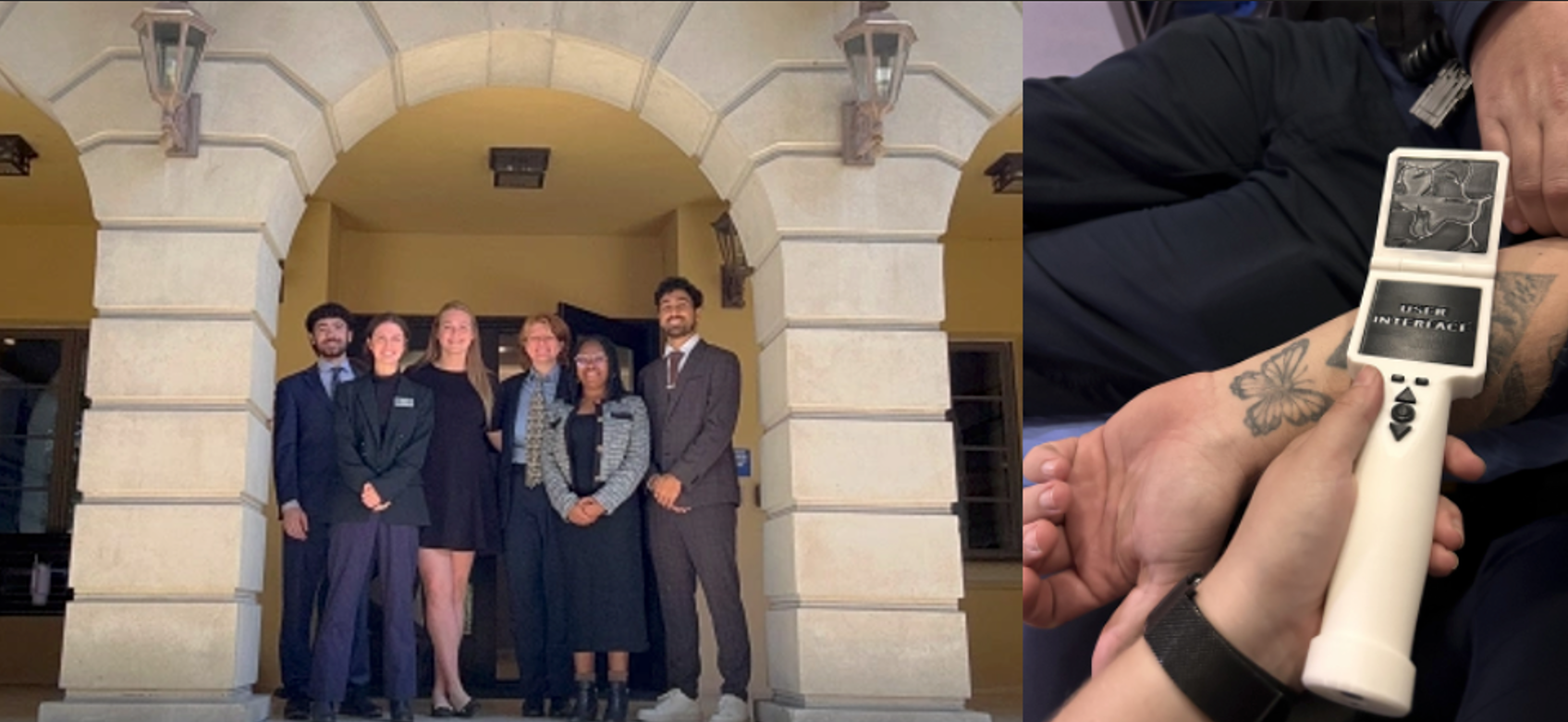
The winning team, SubQ Six, was made up of Rollins College, Crummer Graduate School of Business students Ava Ager, Matheus Westphalen, McKenzie Steuerer, Oliver Alcorn, Xandria Bramble, and Ryan Procopio.
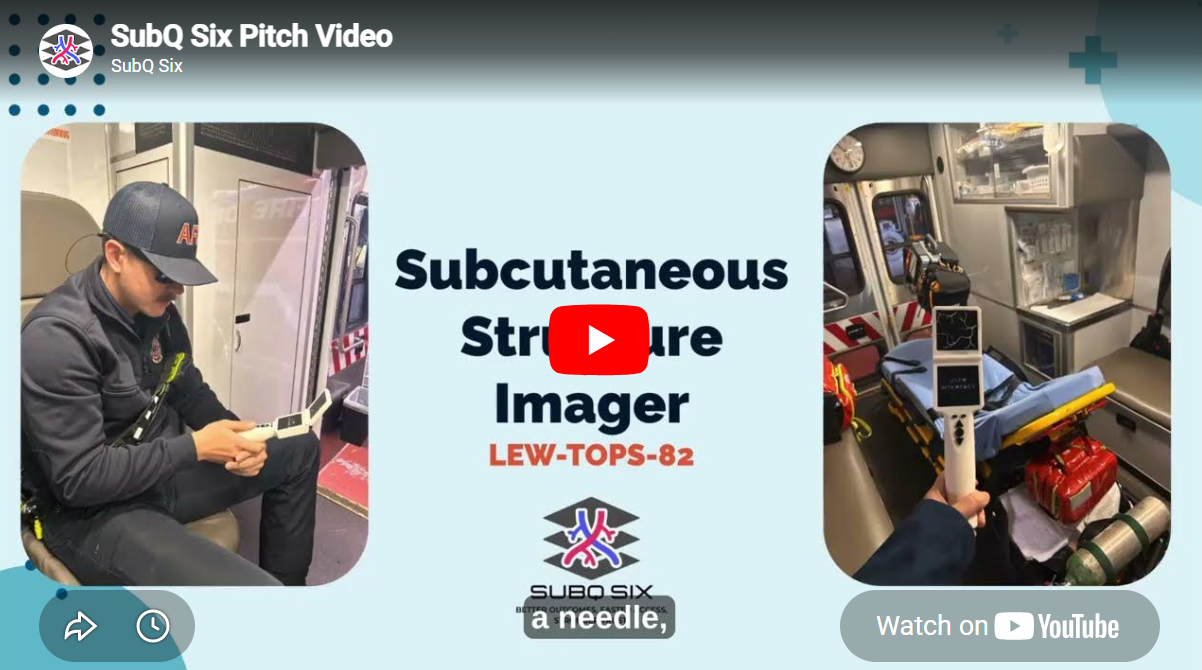
Their project proposed a comprehensive commercialization plan for NASA’s Subcutaneous Structure Imager (SSI), a near-infrared imaging system originally developed for locating veins in challenging patient populations. The team members created a 3D printed prototype for their focus group of potential customers with the novel subcutaneous imager and processor in one handheld unit. This portability helps clinicians and first responders to locate veins beneath the skin in real time without contrast dyes, ultrasound equipment, or complex setup.
The commercialization plan focused on augmenting treatment for high-risk patient populations. Patients in emergency departments, remote medical environments, and disaster situations often face delays when IV access proves challenging. SubQ Six proposed incorporating SSI into these critical settings to improve outcomes by reducing the time it takes to-treat patients. The team noted an additional use case for the device, supporting paramedics during ambulance transport, where time is of the essence and quick IV placement is critical. The team demonstrated a commercialization strategy for SSI that emphasized both clinical value and market readiness for the proposed device.
As a result, the team was awarded $10,000 to continue refining its commercialization concept. Three runner-up teams each earned $1,000, recognizing outstanding submissions that also leveraged NASA-patented technologies in creative and practical ways.
While the challenge concluded in December, its impact continues. For many participants, the experience offered a first step toward forming start-ups, pursuing licenses, or exploring entrepreneurial pathways grounded in NASA innovation.
The success of the Patent Remix Challenge highlights the breadth of NASA’s technology portfolio. Currently, the agency maintains more than 1,300 active patents, representing breakthroughs in materials science, propulsion, aeronautics, communications, power systems, and more. These inventions, originally created to support NASA missions, have enormous potential in commercial sectors from manufacturing to healthcare.
NASA’s Technology Transfer program exists to ensure the American public benefits from these innovations. Through licensing agreements, entrepreneurs and organizations can adapt NASA’s patented technologies for commercial use. In doing so, they help strengthen local economies, create high-tech jobs, and bring advanced solutions into everyday life.
By showcasing NASA patents in a public challenge, NASA expanded awareness of its technology opportunities and encouraged new partnerships with people who might not otherwise encounter NASA intellectual property. For many participants, this was their first opportunity to engage with the agency, explore cutting-edge technologies, and consider how those inventions could transform their own industries.
The Patent Remix Challenge also helped reinforce the value of collaboration, one of NASA’s core strengths. Through structured engagement, mentorship from NASA experts, and support from innovation-focused partners, the challenge demonstrated how agencies, academic institutions, and private-sector organizations can work together to advance American innovation.
As the Subcutaneous Structure Imager moves closer to real-world deployment, it represents just one example of NASA technology addressing significant societal needs. From cleaner water to safer aircraft to improved emergency medical care, NASA innovations continue to influence industries far beyond aerospace. By inviting new perspectives, supporting entrepreneurial thinking, and making its patents more accessible, NASA is helping ensure that the benefits of space exploration reach communities nationwide.
For businesses, entrepreneurs, and innovative thinkers looking to take the next step, NASA offers a variety of license types tailored to different needs, from early-stage development to market-ready production. To explore available patents or learn how to apply for a license, visit technology.nasa.gov. To explore the full NASA Patent Remix Challenge Project Gallery, visit this page.