Because advances made for space travel can do so much more! These innovations have many terrestrial applications in everyday life.
It might surprise you to know just how many NASA-developed technologies are already solving problems unrelated to space exploration. Everything from clothing and light fixtures to beer and reforestation, agriculture, and construction take advantage of this world-class technology pipeline.
Many companies that have developed innovative uses for inventions that let humans to travel in the harsh conditions outside Earth’s protective atmosphere. Those successes blaze the trail for the next transitions from NASA mission to daily use, which might not seem feasible at first glance.
A survey of current commercialization of agency resources throughout diverse industries is a good place to begin considering potential new applications.

Building Forever Homes
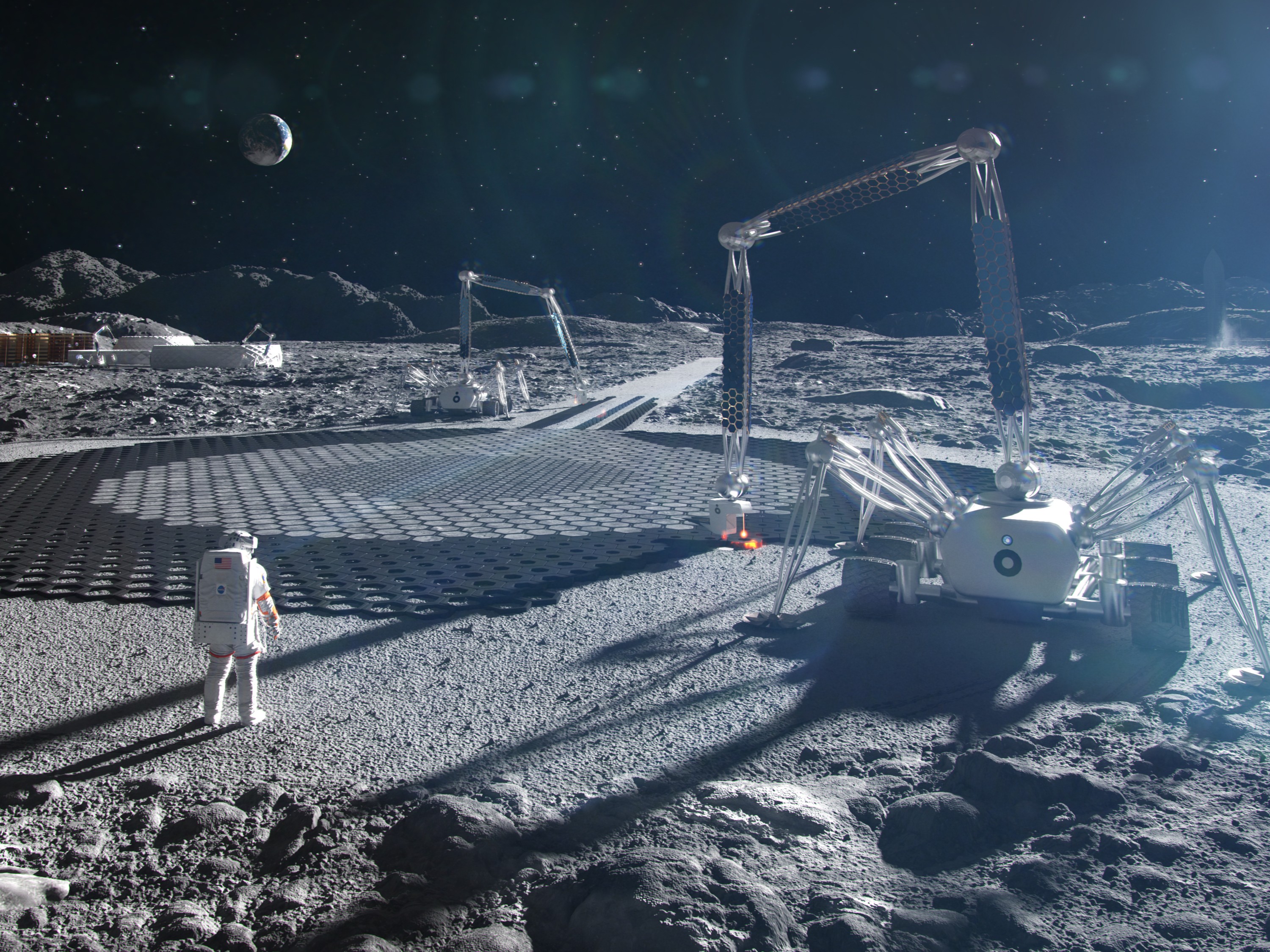
Did you know entire neighborhoods are being built using large-format 3D printing techniques developed in part for NASA to build habitats on other planets?
Building habitats on the Moon or Mars will require equipment that can fly into space and use local materials for construction. NASA’s requirements for the rapid construction of durable, functional, aesthetically pleasing dwellings that minimize waste are equally important on Earth. ICON Technology Inc. did all that and more when building the Wolf Ranch neighborhood using this approach.
“It represents a first-of-its-kind venture, showing how we can introduce 3D printing at scale for residential housing in a way that hasn’t really been done before,” said Evan Jensen, ICON’s senior vice president of engineering. Houses the company built in Tabasco, Mexico, proved sturdy enough to withstand a major earthquake. “We’ve always maintained an appreciation of how diversified this technology and its applications can be,” Jensen said.
Other home essentials come from NASA as well, like bedding, artwork, air purifierslight bulbs. And thanks to NASA’s work in metal 3D printing, even light fixtures have a space travel heritage.
Lighting Up the Night
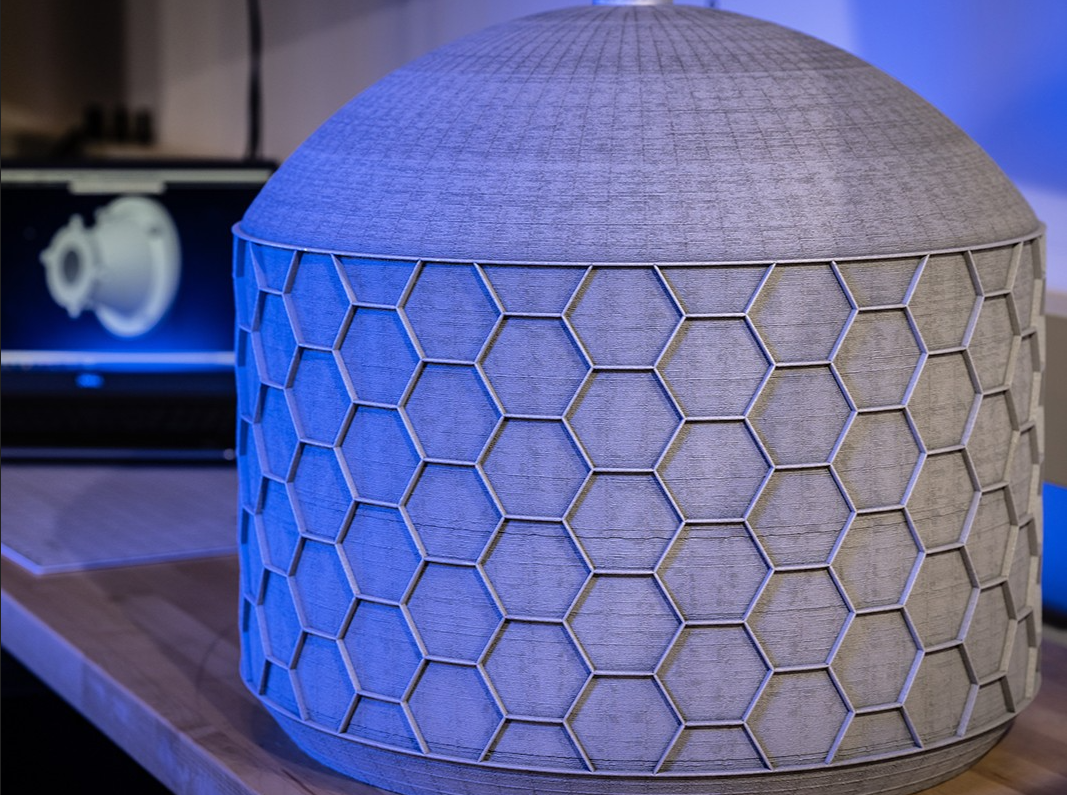
The need for lightweight, durable parts that can survive the extreme vibrations and heat of rocket launches and the hostile environment of space led NASA to explore additive manufacturing techniques, also called 3D printing. One process in particular, called laser powder directed energy deposition, is printing entire rocket engines from various alloys, Including aluminum-based mixtures long considered un-3D printable . This very light metal can now be used to fabricate and replace heavier components.
Elementum 3D Inc. not only worked directly with the agency to perfect this process, but the company is also introducing other industries to the manufacturing technique. The lighting industry is fabricating fixtures that are inexpensive, scratch-resistant, and strong without requiring heat treatment. And 3D printing allows for designs that would otherwise be impossible.
The electricity for these light fixtures is increasingly coming from renewable sources , often solar panels on the roof of a home. Whether for homes or vehicles, NASA technology can ensure consistent power generation and storage.
Storing and Distributing Power
It can be challenging to preserve the long life and consistent functionality of lithium-ion batteries in electric vehicles and other next-generation renewable energy applications. Most are multi-cell units that don’t discharge and recharge evenly. But NASA's battery charge equalizer complements existing high-voltage chargers and instrumentation systems, offering safe and low-cost management.
By effectively keeping all the cells in a multi-cell string at the same charge state, this technology maximizes the battery's life and performance. A novel built-in electrical isolation for the main charge circuit further improves the safety of high-voltage batteries supporting fail-safe operation.
Just as spacecraft must maximize power efficiency, careful management of other critical resources like air and water is essential to maintaining astronaut health. For example, there’s no kitchen sink to provide limitless fresh water in space. So NASA has developed ways to filter and reuse the available supply of water and now shares that technology with everyone.
Cleaning Water
Access to safe drinking water can become more expensive and less reliable as municipal infrastructure ages and chemical spills contaminate groundwater. The ability to purify water coming into a home or business reduces the risk posed by waterborne toxins. The same way NASA must conserve every drop of water on the International Space Station by filtering wastewater, people on Earth can benefit from a highly advanced filtration system.
Laboratory tests of NASA’s Graphene Loading Method for Water Filtration Media have shown a 40-fold improvement in contaminant removal per mass of graphene over the granulated activated carbon filter material that’s currently state-of-the-art. This new treated filter media holds significant promise for commercial applications.
On Earth, there’s no more natural water filter than a forest, which traps sediment and excess nutrients and neutralizes pollutants. But the planet loses tens of thousands of acres of forest every day. Now, NASA know-how is helping to reclaim some of that land for nature.
Giving Nature a Helping Hand
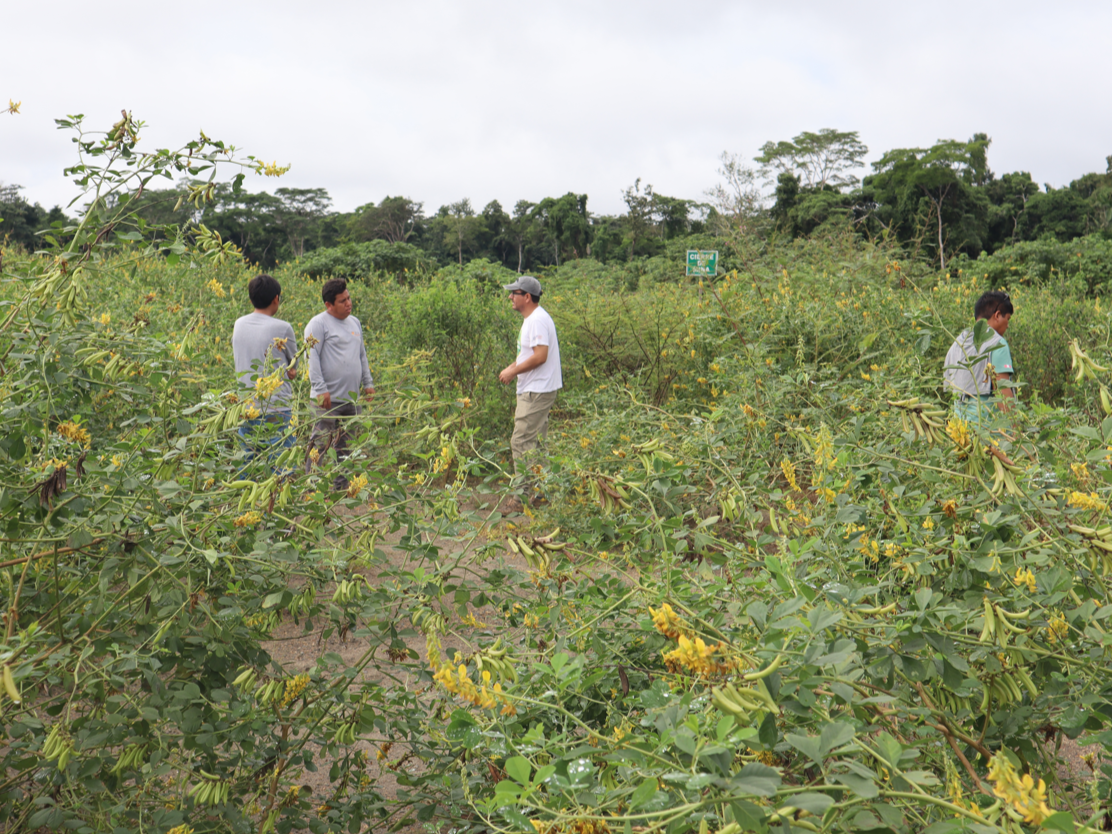
“You have to understand the biology first, and then you design the engineering to match the biology you’re trying to support,” said Lauren Fletcher, cofounded of Flying Forests. Using hyperspectral aerial imagery and ground surveys to understand the local environment, artificial intelligence supports the creation of forest-planting maps, considering factors like elevations and water distribution.
But it’s the unique understanding of building hardware around biology, honed while working on space station experiments, that helped Fletcher develop the unique seed-planting system that enables a drone to plant 10 million trees per year.
“NASA’s technology has been a centerpiece to helping us develop new technologies to manager our critical resources like fisheries, rivers, and forests,” Fletcher said.
In preparation for federal regulations that will allow drones to fly in urban areas and beyond their controllers’ line of sight, innovation in low-altitude flight support systems need to be developed.
Managing Drone Traffic
Drones will need to share the air with helicopters, autonomous air taxis, small airplanes, and other craft. In preparation for this crowded airspace, NASA has created a traffic management system that combines existing aviation and maritime navigation technology with new procedures to safely integrate autonomous and remotely piloted craft with other vehicles in the same airspace.
The system incorporates a host of technologies such as transmitters and receivers to collect and send GPS coordinates while also receiving data from other aircraft to detect potential flight conflicts. Incoming terrain, weather, and geofencing information to maintain safe flight plans can support numerous activities — wildfire mapping, weather monitoring, disaster management, aerial imaging, delivery of goods like medical supplies, and agriculture monitoring.
Until the infrastructure for low-altitude flight is widely available, NASA sensors in low Earth orbit continue to provide Earth data. And for farmers, that’s essential.
Growing Breakfast, Lunch, and Dinner
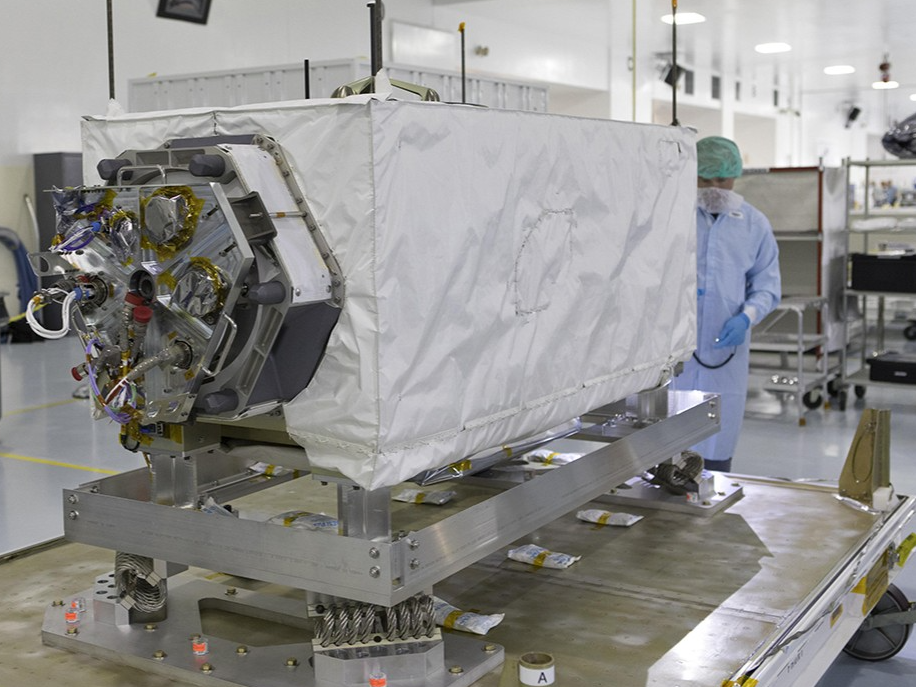
Publicly available data from NASA satellite instruments provides a wealth of information about much of Earth’s surface, a perspective that helps farmers with everything from irrigation to crop predictions. A handheld device like a phone or tablet puts that information into the hands of farmers to support data-driven decision making. Of particular interest is irrigation.
Evapotranspiration shows how much water a crop is consuming, and the models created by IrriWatch, now part of the company Hydrosat, can tell how wet the soil is. This helps a farmer gauge irrigation needs from day to day and reduce the expense of running an irrigation system when it isn’t necessary.
“If you tell them what happened in their field 10 days ago, that’s too late,” said IrriWatch product manager Roula Bachour. “You don’t need to tell me I have dry soil if I already see the crop is dead.”
Bachour noted that the entire business model is based on high-quality NASA data that is accurate, constantly updated, and – crucially – freely available. “You can only make it available for farmers if it’s affordable, and it’s affordable because we get the data for free,” she said. “They don’t want to pay more than the water savings or whatever else they’re gaining.”
NASA sensors are what collect that satellite data, and the agency also develops sensors for a host of other applications, including monitoring conditions in the body. So included in the agency’s available intellectual property is a new way to print biosensor chips as well as other electronics.
Manufacturing Sensors
The need for low-cost, environmentally friendly processes for manufacturing printable electronics and biosensor chips is rapidly growing, a development NASA helped advance with an atmospheric pressure plasma-based fabrication process. It involves room-temperature printing in which an aerosol carrying the desired material for deposition is introduced into a cold plasma jet operated at atmospheric pressure.
The low-cost fabrication can be adapted to accommodate a variety of materials and substrates, including flexible substrates. It’s easily scalable for industrial production and can be adapted for a single material or multiple materials. The technique works with almost any chosen substrate, having already been proven to work for paper, plastic, semiconductors, and metals, among others.
While this kind of manufacturing process is helpful to NASA, problem-solving for missions doesn’t always have a practical goal like improving beer production. But that is exactly what resulted from the effort to build technology to generate oxygen on Mars.
Bubbling Up Beer
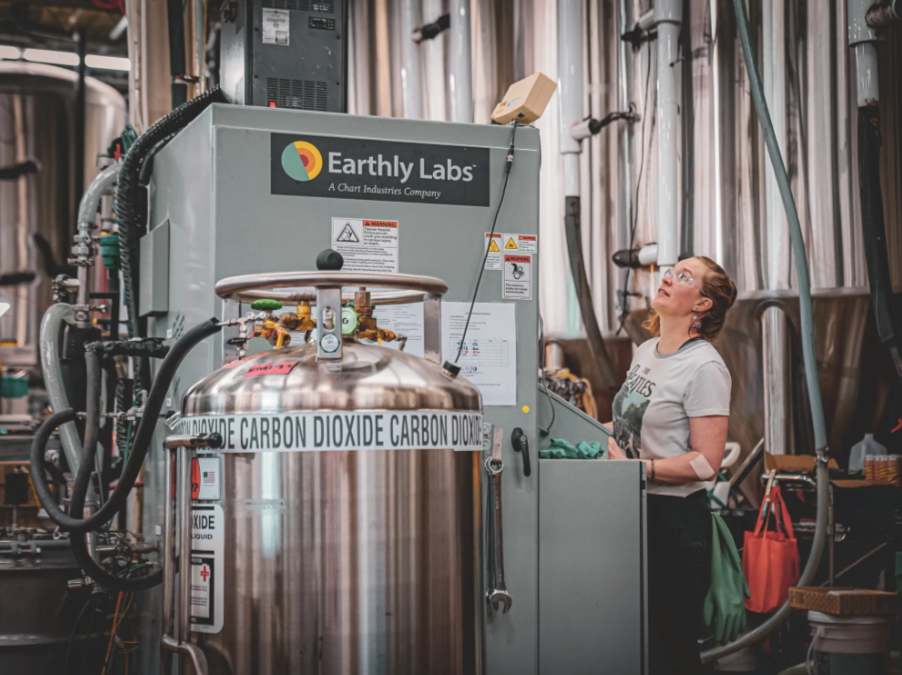
Technology for capturing carbon dioxide from the Martian atmosphere and purifying, pressurizing, and liquefying it for numerous uses is now doing the same thing in breweries. A carbon-capture system developed by Earthly Labs, based on a license from a company that worked extensively on NASA technology for Mars, is sized for microbreweries to capture the carbon produced in the brewing process for later use in carbonation. The system is also proving useful for wineries, distilleries, power plants, and even helium drillers.
Capturing carbon is one of many ways NASA technology improves the health of the planet. But it also keeps people healthy, as might be expected of an agency that must maintain astronaut health in the unforgiving space environment.
Creating Cartilage
NASA conducted research into time-variance magnetic-field therapies and developed a pulsed electromagnetic field device that can alleviate cartilage degradation in joints by promoting the growth of new cartilage. Noninvasive and painless regeneration of a patient’s own tissue offers fewer side effects than surgical joint replacement or tissue engineering procedures.
Whether caused by rheumatism, joint dysplasia, trauma, or surgery, joint disorders often degrade cartilage and result in intense pain. The U.S. Food and Drug Administration has already recognized the efficacy and electromagnetic field therapies, approving devices for use in the stimulation of bone regrowth in artificial joint disunions.
Technologies like this and over 1,000 others developed by NASA provide the starting point for new products and services to fill market gaps in various industries. All that’s needed is an entrepreneurial spirit to explore the patents available and learn how they might augment a company’s offerings or serve as the starting point for a new business venture.
The inventors behind these innovations are available to answer questions and even troubleshoot development challenges. Because part of NASA’s mission is to improve life on Earth, subject matter experts are poised to help their innovations evolve and improve life right here at home.
For more information about these and other technologies visit NASA’s Technology Transfer program Patent Portfolio to explore the solutions available to every individual and business. You can learn more about the licensing process online or contact us with questions via Agency-Patent-Licensing@mail.nasa.gov.