Search
Mechanical and Fluid Systems

Magnetically Damped Check Valve
The oscillatory behavior can lead to seal wear, increased leakage, and the generation of foreign object debris (FOD), which is particularly problematic in high-reliability systems like spacecraft or cryogenic propulsion. The valve integrates a magnetic damping system into a conventional check valve architecture. Key components include a non-magnetic, electrically conductive poppet body (e.g., copper), a ferromagnetic sleeve (e.g., HIPERCO 50A) inside the poppet, and a set of Neodymium Iron Boron (NdFeB) magnetized rings arranged in alternating polarities around a non-magnetic valve body. A second ferromagnetic sleeve completes the magnetic circuit, concentrating magnetic flux through the poppet during motion.
When the valve operates, the poppet moves in response to pressure differentials. As it travels through the magnetic field, eddy currents are induced in the conductive poppet body. These currents generate a magnetic field that opposes the motion of the poppet, providing velocity-proportional damping based on Lenz’s Law. This passive damping mechanism prevents oscillation and chatter without relying on fluid viscosity or mechanical contact, enabling smooth, reliable valve operation across a wide range of flow conditions. The system is tuned to achieve critical damping by balancing magnetic flux, poppet mass, and spring rate.
This innovation offers significant advantages. In aerospace applications, the valve can be used in purge systems or cryogenic fluid lines to eliminate chatter, improving valve longevity and reducing FOD risk. In the oil and gas industry, it can enhance safety and reliability in high-pressure systems where valve failure could be catastrophic. Industrial processing systems benefit from reduced maintenance and improved flow stability. The valve’s passive, wear-free damping also lowers lifecycle costs and simplifies design integration, making it attractive for commercial licensing and deployment across multiple sectors. This technology is TRL 3 and is currently available for licensing.
mechanical and fluid systems
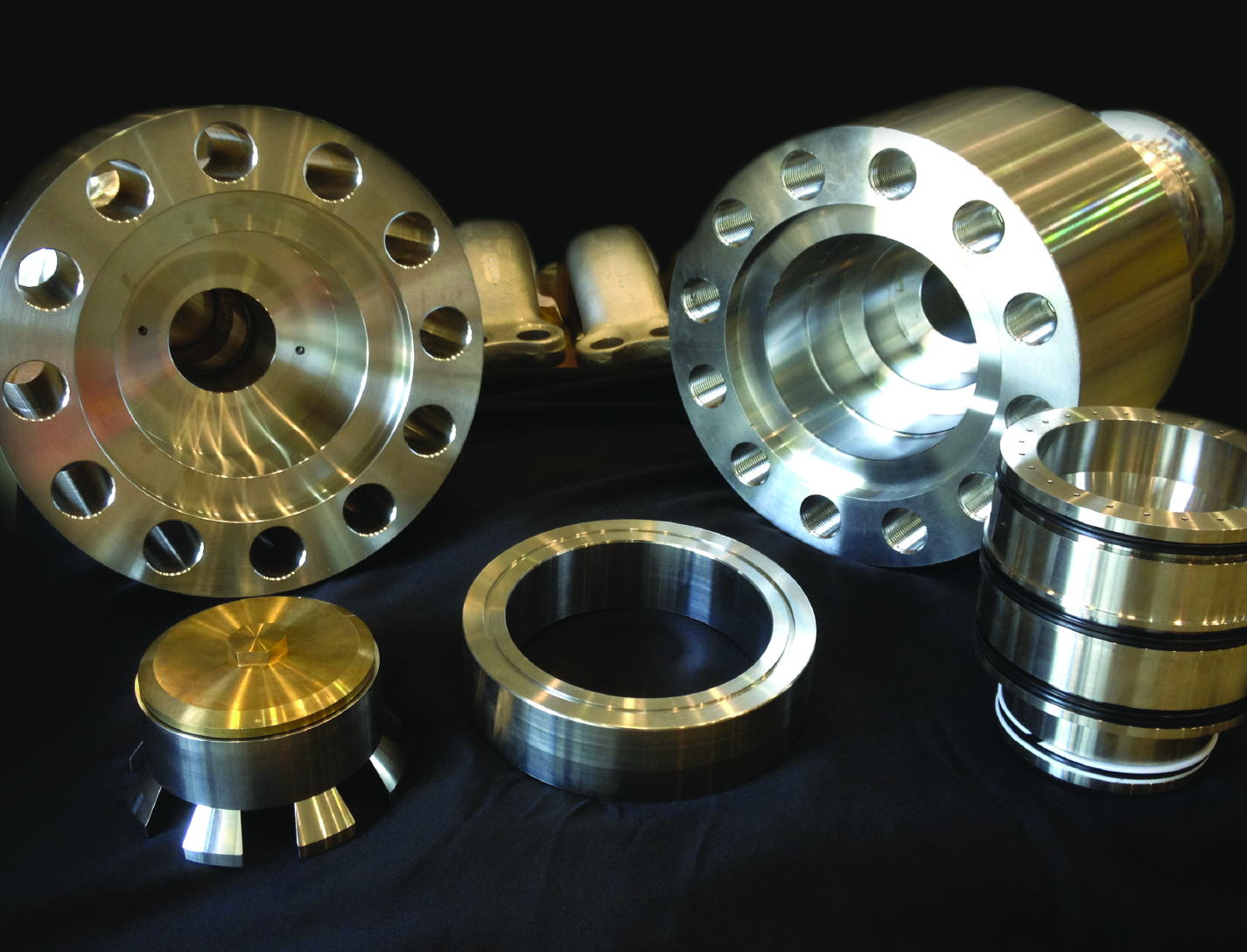
Floating Piston Valve
Instead of looking to improve current valve designs, a new type of valve was conceived that not only addresses recurring failures but could operate at very high pressures and flow rates, while maintaining high reliability and longevity. The valve design is applicable for pressures ranging from 15-15,000+ psi, and incorporates a floating piston design, used for controlling a flow of a pressurized working fluid.
The balanced, floating piston valve design has a wide range of potential applications in all sizes and pressure ranges. The extremely simple design and few parts makes the design inherently reliable, simple to manufacture, and easy to maintain. The valve concept works with soft or hard metal seats, and the closing force is easily adjustable so that any closing force desired can be created. The fact that no adjustment is required in the design, ensures valve performance throughout valve life and operation.
This valve has many unique features and design advantages over conventional valve concepts:
- The largest advantage is the elimination of the valve stem and any conventional actuator, reduces physical size and cost.
- It is constructed with only 5 parts.
- It eliminates the need for many seals, which reduces failure, downtime and maintenance while increasing reliability and seat life.
- The flow path is always axially and radially symmetric, eliminating almost all of the flow induced thrust loads - even during transition from closed to open.
Mechanical and Fluid Systems

Low-Cost, Long-Lasting Valve Seal
NASA's technique simplifies the seat installation process by requiring less installation equipment, eliminating the need for unnecessary apparatus such as fasteners and retainers. Multiple seals can be installed simultaneously, saving both time and money.
NASA has tested the long-term performance of a solenoid actuated valve with a seat that was fitted using the new installation technique. The valve was fabricated and tested to determine high-cycle and internal leakage performance for an inductive pulsed plasma thruster (IPPT) application for in-space propulsion. The valve demonstrated the capability to throttle the gas flow rate while maintaining low leakage rates of less than
10<sup>-3</sup> standard cubic centimeters per second (sccss) of helium (He) at the beginning of the valves lifetime. The IPPT solenoid actuated valve test successfully reached 1 million cycles with desirable leakage performance, which is beyond traditional solenoid valve applications requirements. Future design iterations can further enhance the valve's life span and performance.
The seat seal installation method is most applicable to small valve instruments that have a small orifice of 0.5 inches or less.