Search

Materials and Coatings
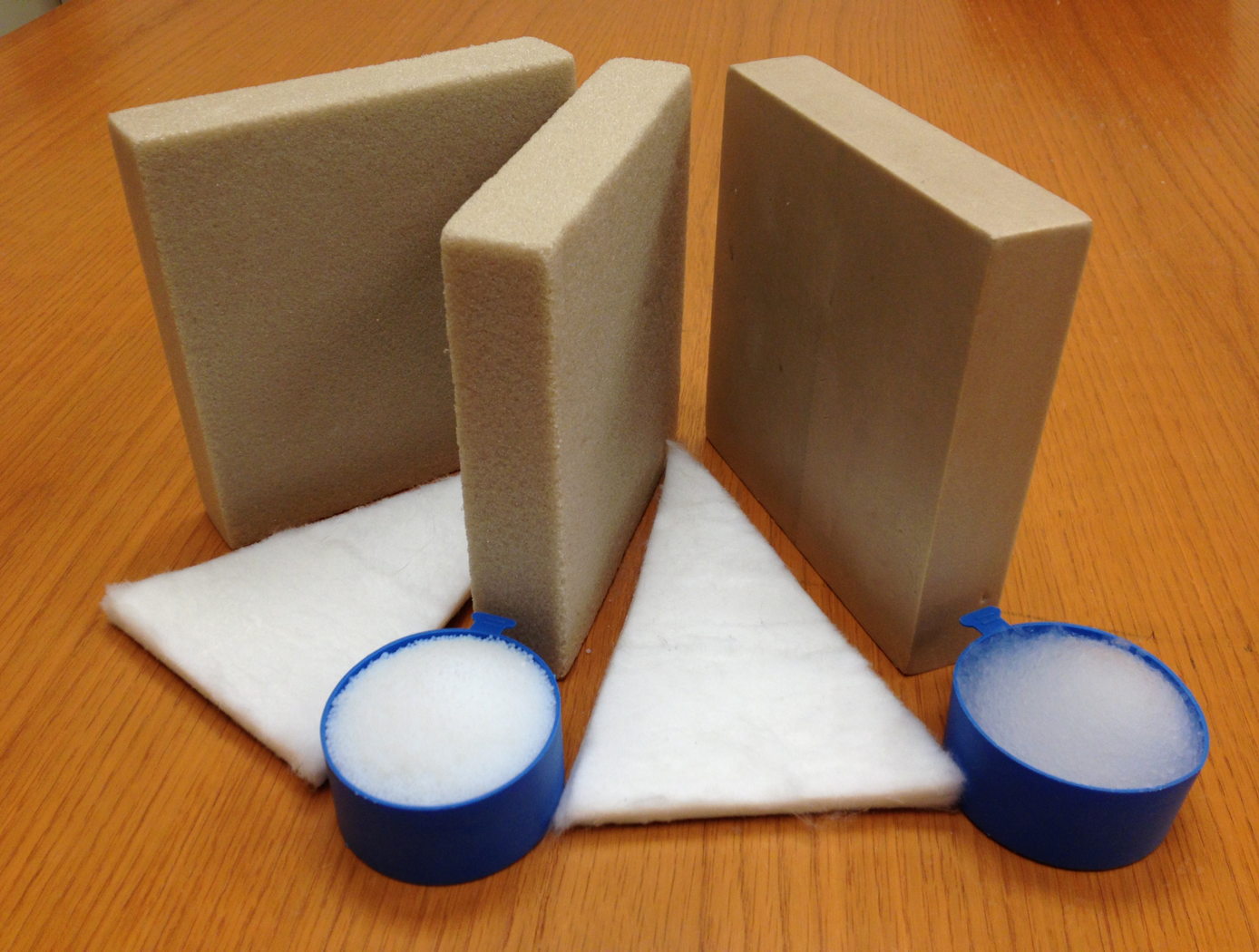
Aerofoam
The Aerofoam composites have superior thermal and acoustic insulation properties when compared to conventional polyimide foams. In addition, they provide greater structural integrity than the fragile aerogel materials can provide independently. In general, polymer foams can provide excellent thermal insulation, and polyimide foams have the additional advantage of excellent high-temperature behavior and flame resistance compared to other polymer systems (they do not burn or release noxious chemicals). Incorporating aerogel material into the polyimide foam as described by this technology creates a composite that has been demonstrated to provide additional performance gains, including 25% lower thermal conductivity with no compromise of the structural integrity and high-temperature behavior of the base polyimide foam. The structural properties of Aerofoam are variable based on its formulation, and it can be used in numerous rigid and flexible foams of varying densities. Aerofoam has a number of potential commercial applications, including construction, consumer appliances, transportation, electronics, healthcare, and industrial equipment. In addition, these high-performance materials may prove useful in applications that require insulation that can withstand harsh environments, including process piping, tanks for transporting and storing hot or cold fluids, ship and boat building, and aerospace applications.

Materials and Coatings
Water filtration cartridge flow-through illustration
Graphene Loading Method for Water Filtration Media
NASA and the US Army Engineer Research and Development Center (ERDC) co-developed advanced graphene materials designed to improve the filtration rate of spacecraft water contaminants which could significantly extend the service life of existing media filtration beds. Traditional granulated activated carbon (GAC) media is characterized by having a polymodal pore structure and contains micro-, meso-, and macropores that trap and contain contaminants. By using the referenced method to add graphene nanoparticles to an existing GAC filtering substrate, additional filtering can be achieved due to graphene’s mostly mesoporous nature. A high-level overview of the graphene loading process is thus: The unloaded graphene nanoparticles are mixed with a water-based graphene suspension for an extended time at room temperature. This “graphene bath” process is repeated several times before the now graphene-loaded (up to ~ 1% by mass) filtration media is dried and prepared for packing into a filter cartridge. The graphene suspension used during the loading process may be reused multiple times, reducing consumables in the process. Laboratory testing has shown a 40x improvement in contaminant removal per mass of the absorbent (i.e., graphene) over the state of the art (granulated activated carbon) at lower loading rates, suggesting significant promise of the treated filter media posing a potential solution to the demands of an entire mission lifecycle. Potential commercial applications for this graphene loading method may lay in four distinct market segments that rely on filtration media beds (outside of aerospace): industrial filtration such as ultra-pure water refining for the semiconductor industry, commercial filtration, residential filtration, and filtration-as-a-service. Graphene nano-particles’ tunable pore sizing, in conjunction with this loading method, could offer tailored filtration boosting for existing water filter substrates. The Graphene Loading Method for Water Filtration Media has a technology readiness level (TRL) 4 (Component and/or breadboard validation in laboratory environment), and it is now available for patent licensing. Please note that NASA does not manufacture products itself for commercial sale.
Stay up to date, follow NASA's Technology Transfer Program on:
facebook twitter linkedin youtube
Facebook Logo X Logo Linkedin Logo Youtube Logo