
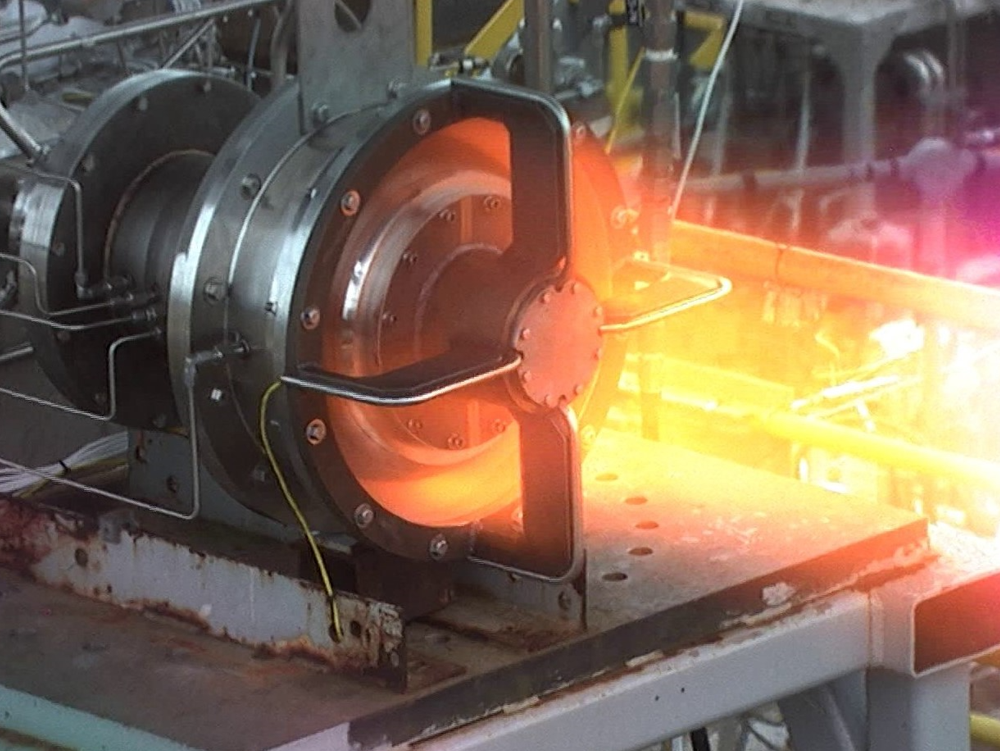
Stennis Space Center (SSC) serves as NASA’s premier rocket propulsion testing facility. Historically, SSC has tested every space shuttle main engine and now continues that legacy by testing RS‑25 engines and core stages for the Artemis Program.
SSC is home to some of the largest testing infrastructure in the world, including the B-2 Test Stand, used to test the SLS (Space Launch System) core stage. Stennis also operates the E Test Complex, a versatile set of test stands suited for assembling and testing components for emerging commercial space companies.
SSC continues to expand its world-class propulsion work while also supporting research in intelligent and autonomous systems and providing controlled air, land, and water areas for testing by federal partners.
About SSC Technology Transfer
The Stennis Space Center Technology Transfer Office’s mission is to aid innovators in the development, maturation, patenting, and commercialization of technologies developed at SSC and NASA more broadly. Technologies developed at SSC often facilitate new and innovative methods and techniques in propulsion system testing, advanced cryogenic fluid management, and supersonic fluid flow. Commercial adoption of these technologies bolsters the growing Gulf Coast aerospace industry by driving job creation, supporting small local businesses, and maximizing the national return on investment in space exploration.
SSC specifically excels in areas such as:
- Propulsion Systems Testing
- Cryogenic Systems
- Autonomous Systems
- Computational Modeling, Simulation, and Testing of Fluid Flows
- Industrial Valves
- Sensors and Instruments
All of SSC’s patented technologies can be viewed online in our Patent Portfolio.
Mechanical and Fluid Systems
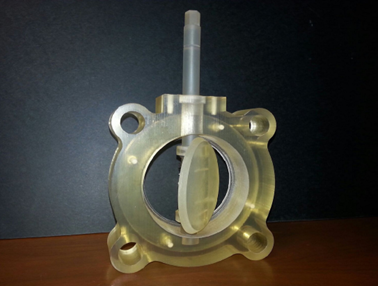
Cryogenic Cam Butterfly Valve: Conventional butterfly valves struggle to seal across both ambient and cryogenic temperatures because thermal expansion and contraction change critical disc-to-seat clearances. The Cryogenic Cam Butterfly Valve (CCBV) overcomes this limitation by mounting the disc on a cam shaft with a torsion spring, enabling both standard 90° rotation and some sliding motion along the axis. This combined movement maintains a tight seal despite temperature-induced dimensional changes, achieving globe-valve-like sealing performance with low leakage across operating conditions. Its simplified design also reduces manufacturing complexity and maintenance costs. Applications include chemical processing (distillation, evaporation), oil and gas refinement (vacuum distillation), and altitude simulation.
Cryogenics & Fluid Management
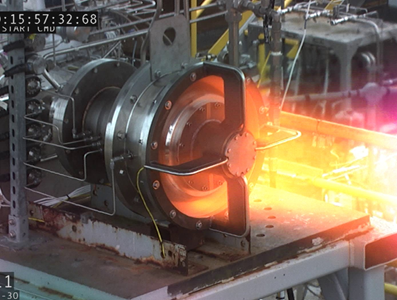
Supersonic Spike Diffuser: A new type of spike diffuser developed at SSC can roughly double the performance of older diffuser designs. By shaping the airflow more efficiently, it allows test stands to reach much lower vacuum pressures, enabling the use of more powerful, higher‑expansion‑ratio rocket nozzles. Spike diffusers are also spatially compact, requiring only about 25% of the length of second-throat designs. Benefits include reduced structural overhead and lower vacuum achievable for a fixed feed pressure and mass flow.
Propulsion
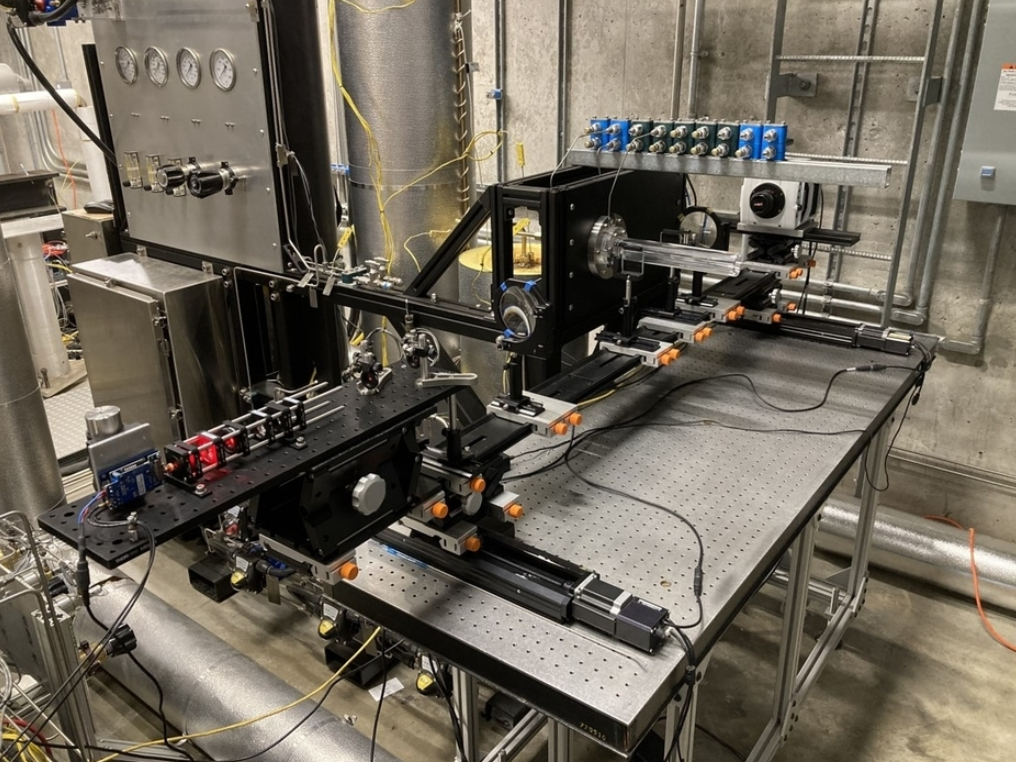
HYPERFIRE: While researching methods to optimize such tradeoffs, engineers at SSC discovered that ethane can be tuned to simulate rocket exhaust plumes generated by several common rocket propellants. This led NASA to develop the Hydrocarbon Propellants Enabling Reproduction of Flows in Rocket Engines (HYPERFIRE), a sub-scale, non-reacting flow test system. HYPERFIRE uses heated ethane to enable physical simulation of rocket engines powered by a broad range of propellants in an inexpensive, accurate, and simple fashion. Potential applications include rocket engine testing, development, fundamental nozzle research, and simulation of combustion products such as in automotive testing.
SSC represents a unique synergy of federal, state, and commercial aerospace innovation. As Stennis continues to prove the flightworthiness of the next generation of space propulsion systems, NASA remains committed to making these novel testing, sensing, and fluid management technologies accessible to the commercial sector.
For further questions about our patents or to learn more about SSC’s innovations and testing facilities, reach out to SSC’s Technology Transfer Office at SSC-Technology@nasa.gov