Search
Materials and Coatings

GRC103y: Nano-Yttria Strengthened C103 for Additive Manufacturing
The manufacturing process, building on techniques showcased in LEW-TOPS-151, employs a novel acoustic mixing technique to coat spherical C103 powder particles with a uniform distribution of sub-200 nanometer yttria particles. During laser powder bed fusion additive manufacturing, layer-by-layer remelting disperses these yttria particles uniformly throughout the component microstructure. This eliminates the expensive, time-consuming mechanical alloying steps traditionally required for ODS alloys while enabling near-net-shape fabrication of complex geometries.
Performance testing demonstrates substantial improvements: GRC103y exhibits double the yield strength at 800°C and 1.5x the yield strength at 1,400°C compared to baseline C103. The alloy also shows superior thermal stability: after one hour at 1,500°C, GRC103y retains 90% of its room temperature strength compared to only 67% for C103. Preliminary creep testing at 1,300°C and a stress of 50 MPa indicates significant improvements in creep resistance by 2539 times over baseline C103. Furthermore, GRC103y maintains excellent formability, allowing manufacturers to use traditional fabrication methods when desired.
While NASA originally developed GRC103y for rocket propulsion and hypersonic vehicle applications, the alloy offers value across multiple industries. Aerospace companies can achieve weight savings or push systems to higher temperatures, while the alloy's compatibility with commercial oxidation coatings makes it suitable for environments requiring oxidation protection. GRC103y is currently available for patent licensing.
Materials and Coatings

Additively Manufactured Oxide Dispersion Strengthened Steel for Nuclear and High-Temperature Applications
Building on the dispersion and acoustic mixing methods developed during the creation of NASA's Glenn Research Center GRX-810 technology, this Additively Manufactured ODS Steel uses an innovative coating process to overcome the limitations of traditional ODS steel manufacturing. The technology deposits yttrium oxide nanoparticles onto spherical iron-chromium steel powder particles. During the additive manufacturing process, the coated powder particles are melted and consolidated layer by layer using laser powder bed fusion. As the material solidifies, the oxide nanoparticles distribute uniformly throughout the microstructure, creating a dispersion-strengthened material. The dispersed yttria nanoparticles pin grain boundaries and dislocations, significantly improving creep resistance and mechanical strength at elevated temperatures. Preliminary testing has demonstrated a 10-fold improvement in creep properties compared to non-ODS baseline steels.
The technology demonstrates compatibility with industrial-scale laser powder bed fusion systems and can be adapted to incorporate alternative ceramic nanoparticles beyond yttria. Applications span the nuclear energy sector, including commercial fission reactor components, fusion reactor first-wall and blanket structures, nuclear thermal propulsion systems for space exploration, and in-space nuclear power systems where extreme temperature performance and radiation resistance are essential. This strengthened steel is available for patent licensing.
Materials and Coatings
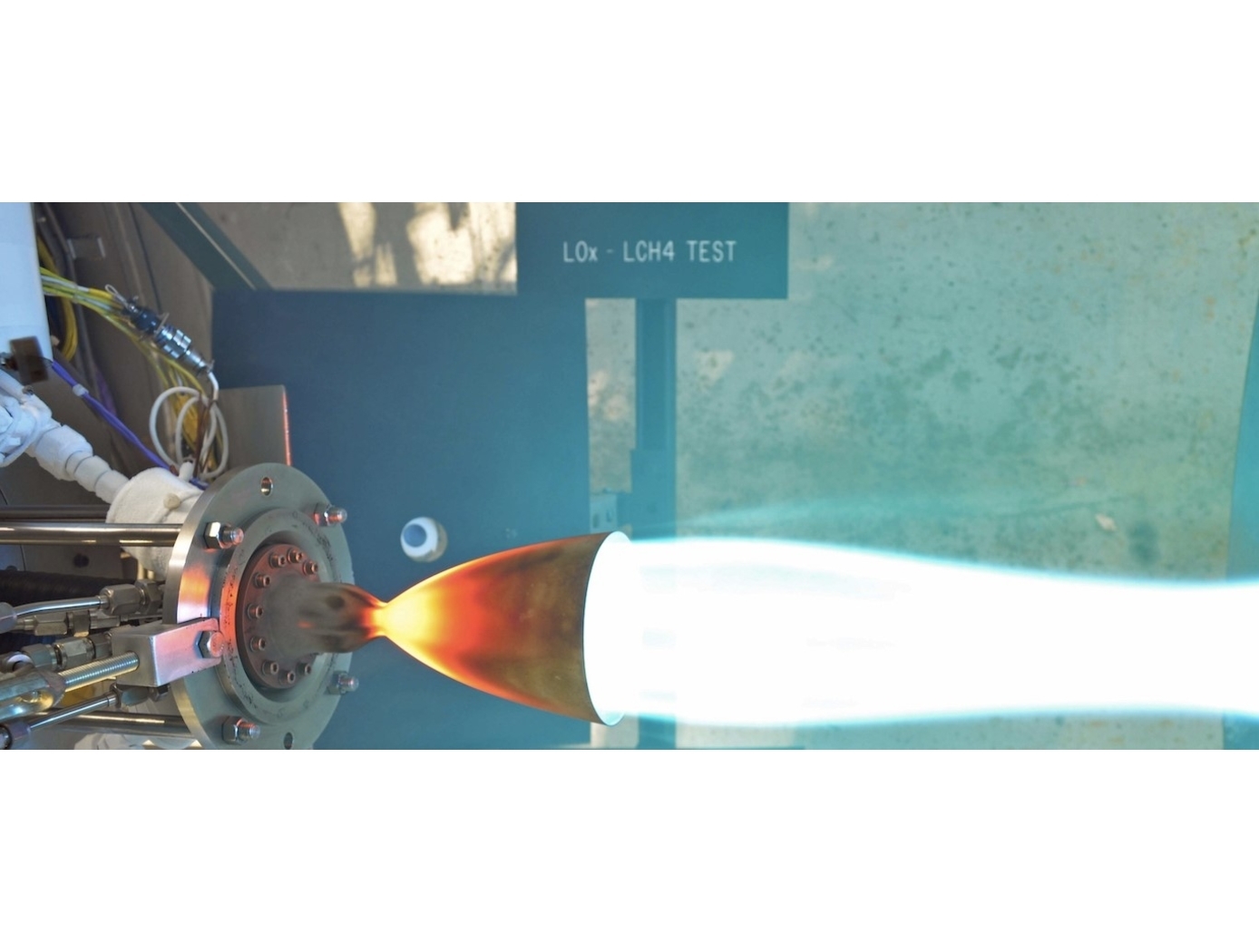
Oxide Dispersion Strengthened Medium Entropy Alloy
NASA's ODS-MEA maintains properties up to 1100°C and is not susceptible to deleterious phase changes when exposed to extreme temperatures, an issue ubiquitous to Ni- based superalloys such as Inconel-625 and Inconel-718. Yttria particles are dispersed throughout the alloy to maximize strength and creep resistance at high temperatures using a novel fabrication technique. This technique employs an acoustic mixer to stir nano-scale Yttria oxide powder within a metallic matrix powder, creating a film of Yttria surrounding the larger metallic powder particles. Solid components are then produced from this mixture via SLM, during which the laser disperses the Yttria particles throughout the microstructure. Ultimately, the process eliminates the many expensive and time-consuming steps in the production of ODS alloys via traditional mechanical alloying. NASA's process has been shown to fabricate components with 10x improvement in creep rupture life at 1100°C and provides a 30% increase in strength over what is currently possible with 3D printed parts. The new ODS-MEA composition may find applications where ODS alloys are currently used (e.g., those involving extreme thermal environments). Applications may also include areas where such properties are desirable but the resource-intensive nature and/or inability to produce highly complex geometries via conventional processes ultimately renders their use uneconomical or infeasible. Such uses include gas turbine components (for which increasing inlet temperature enables improved efficiency) for power generation, propulsion (rockets, jet engines, etc.), industrial processes, nuclear energy applications, and sample preparation equipment in the mining and cement production industries, among many others.