Search
Aerospace

Suppression of Jet Noise for a Plug Nozzle Using Porosity on the Plug Surface
The plug architecture replaces traditional solid exhaust plugs with an elongated design characterized by a hollow interior and a uniformly porous surface. By positioning the plug's crown inside the nozzle, the exhaust travels through a convergent passage up to the crown and a divergent passage past it. In standard solid plugs, shock waves become unsteady at off-design pressure ratios, causing severe acoustic resonance. The porous skin stabilizes localized flow separation and disrupts unsteady shock formation. By doing so, the technology alters complex aerodynamic interactions providing the noise reduction. Translation of the plug provides variable design condition without requiring heavy, maintenance-intensive mechanisms.
Sub-scale acoustic testing demonstrates superior noise suppression without sacrificing aerodynamic efficiency. While existing aerodynamic treatments (such as tabs or boundary layer tripping) only mitigate screech or transonic tones, the porous plug represents a breakthrough by eliminating BBSN and EBBN as well as other aberrant noise. Additionally, thrust measurement data indicates this dramatic noise reduction is achieved with minimal impact on the gross thrust coefficient, preserving engine performance within <1% of conventional plugs.
While NASA originally developed this porous plug nozzle to help next-generation commercial supersonic aircraft meet strict LTO noise regulations, the technology offers broader aerospace utility. The design can be implemented in high-speed military aircraft to mitigate operational acoustics, or integrated into aerospace inlets and internal ducts to suppress flow noise originating from center-bodies.
aerospace
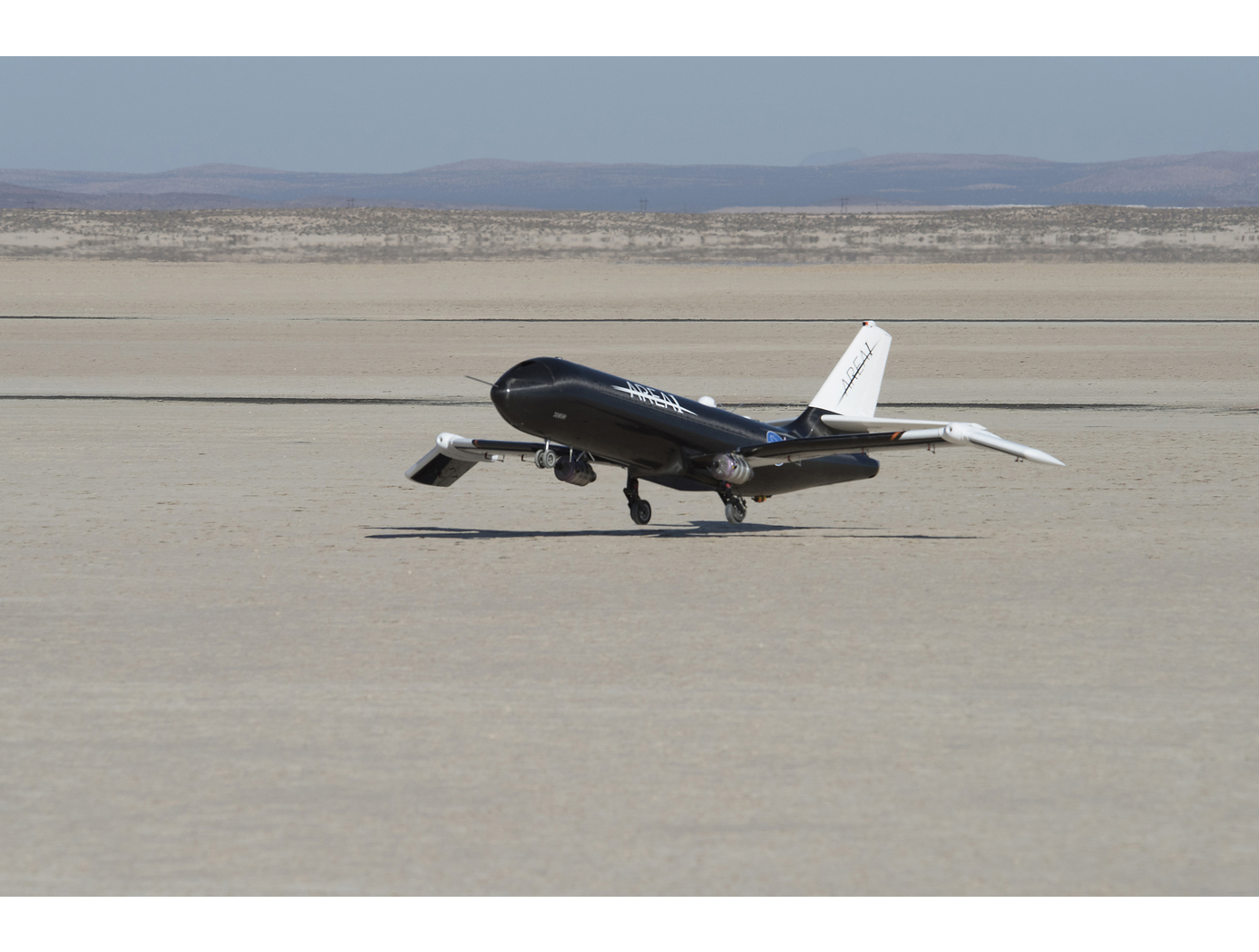
Outer Aileron Yaw Damper
Rudders have long served as the primary flight control surface as is pertains to aircraft yaw. Breaking this mold, NASA's SAW technology is a game-changing development in aircraft wing engineering that reduces rudder motion required to control aircraft. The benefits of reduced rudder dependency led NASA to develop the outer aileron yaw damper to further decrease or eliminate rudder dependency for aircraft using SAWs.
As mentioned, SAWs use shape memory alloy actuators to articulate the outer portion of the wing, effectively creating a movable wingtip. NASA's invention uses an outer aileron located on the wingtips, which is driven (along with the inner ailerons) by a novel control algorithm. The control algorithm, taking into account the wingtip positions, manipulates the outer ailerons to achieve the desired yaw rate. At the same time, it positions the inner ailerons to counter roll rate resulting from the outer aileron. In other words, the control algorithm calculates a control surface ratio (i.e., position of inboard aileron and outboard aileron) that produces desired yaw and roll accelerations.
The system can also be used to offset the existing rudder in current or future aircraft designs. A second part of NASAs novel outer aileron control algorithm modifies the aircrafts rudder loop gain in proportion to outer aileron usage. This allows the outer ailerons and rudder to work in tandem, while at the same time reducing rudder usage.
As a result of this NASA invention, required rudder usage can be reduced or eliminated for aircraft with SAWs. Consequently, the size of rudders and vertical tail structures can be reduced, which in turn reduces weight and parasitic drag. The result is an aircraft with increased performance and fuel efficiency.