NASA Technology Licensing Webinars
NASA's Advanced Solid-State Metal Additive and Extrusion Technology Webinar
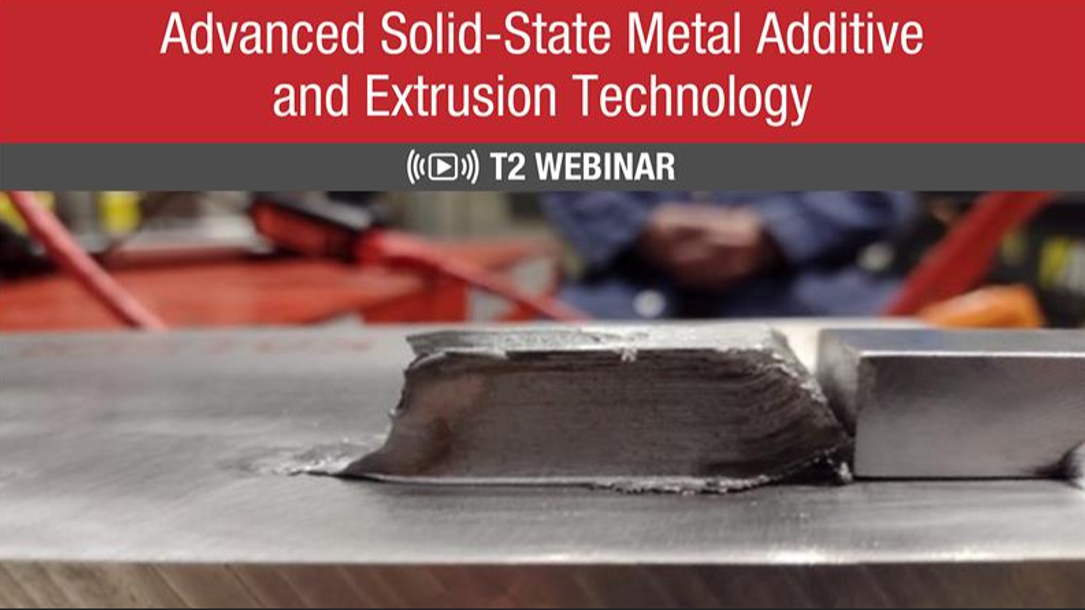
Conventional friction stir extrusion machine
NASA Marshall Space Flight Center has developed a new small-scale metal extrusion tool, called a conventional friction stir extrusion (C-FSE) machine that may be attached or added-on to a conventional friction stir welding (C-FSW) system. The C-FSE machine uses the heat generation and plastic deformation processes underpinning C-FSW to perform metal extrusion instead of metal joining. The new tool can perform small-batch extrusion runs with custom geometries that can be easily changed by replacing the modular extrusion block face plate. Compared to traditional metal extrusion processes, large billets of metal do not have to be preheated prior to the extrusion for the C-FSE machine as raw metal rods can be fed directly into the extrusion block, saving significant tooling and energy costs. The C-FSE machine can work with any metal alloy that is amenable to FSW processes, including aluminum alloys and other lightweight or exotic alloys.
For more information on this technology, please visit: https://technology.nasa.gov/patent/MFS-TOPS-126
Friction Stir Deposition Innovations
Innovators at the NASA Marshall Space Flight Center have developed two new friction stir deposition (FSD) add-on tools that allow a conventional friction stir welding (C-FSW) system to be reversibly adapted for deposition within minutes. Both FSD end effectors use the rotating pin of the FSW tool to heat and plasticly deform metal feedstock for solid-state additive processes. The first tool—Conventional Friction Stir Deposition (C-FSD)—allows for layer-by-layer addition of extruded metal to an existing part using a C-FSW system plus a side-loading metal bar feeder device and containment block. The exit shape of the containment sets the final geometry of the part, enabling complex shapes (e.g., domes, barrels) to be deposited directly on a substrate (e.g., stiffeners to panels). The second tool—Bobbin Friction Stir Deposition (B-FSD)—makes use of a self-reacting tool design to contain the metal on two sides with the filler material fed between the shoulders. When paired with an FSW machine with a Self-Reacting Friction Stir Weld (SR-FSW) adjustable pin axis, continuously varying thickness parts are printable, as well as free-forming printing of complex curvatures.
For more information on this technology, please visit: https://technology.nasa.gov/patent/MFS-TOPS-127