Search
Mechanical and Fluid Systems
Miniature Separable Fill & Drain Valve
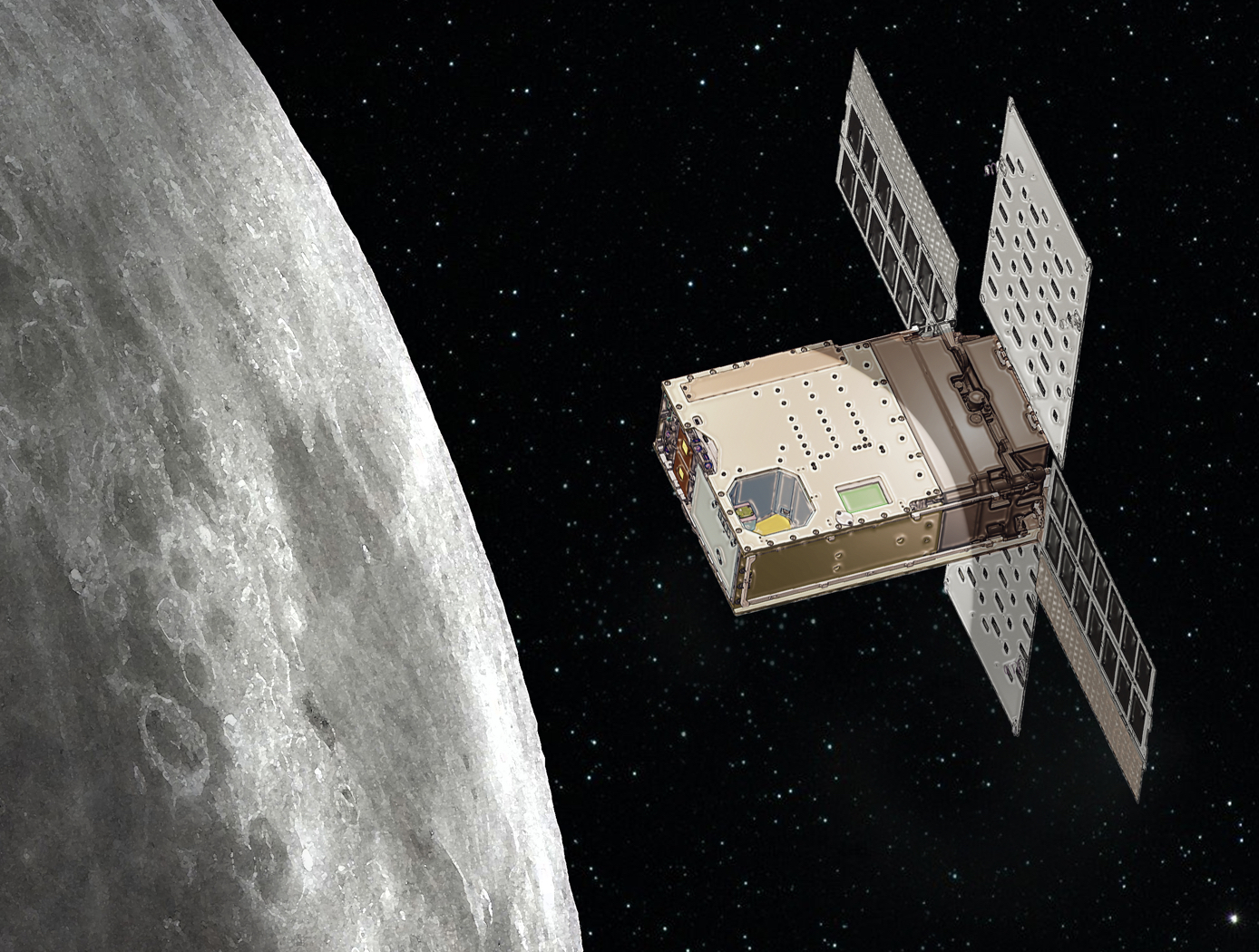
The Miniature Separable Fill & Drain Valve consists of two halves (ground and flight). The flight half is attached to the vehicle (i.e., CubeSat), and the ground half can be inserted into the vehicle in the same port as the flight half, connecting the two halves together. In normal state, the flight half seals the flow path. When the ground half is connected, the flow path is opened, allowing connected ground support equipment to supply fluid through the valve. The valve is manually operated.
There are redundant seals to eliminate leakage around the valve, including NASA's previously-patented Low-Cost, Long Lasting Valve Seal design (Patent No. 10,197,165; see MFS-TOPS-71 in the <i>Links</i> section of this flyer for more information) on the flight half. This eliminates the need for a swaged assembly process and the additional hardware and equipment that are typically required in conventional, elastomeric valve seat installations. The design also includes a cap for the flight half to ensure there is no leakage in flight configuration.
The Miniature Separable Fill & Drain Valve has been prototyped and provides valuable benefits for CubeSat applications. The valve could also have applications in the industrial processing industry where low flow devices are commonly used. The design is also scalable to larger applications where the removal of the actuation device would be desired.
Aerospace

Hypergol Refueling Tool (HRT) and Quick Disconnect (QD) System
The HRT and QD System was designed for satellite Fill and Drain Valves (FDVs), however, the architecture and approach are extensible to all space assets that could potentially be fueled/re-fueled on and off the ground, including but not limited to manned crew vehicles, planetary rovers, and space habitats. In the same vein, the solution is extensible to spacecraft propellants, pressurants, and other media beyond hypergolic fuels. It can be used in the delivery or receipt of media.
The HRT-QD is a separate end adapter onto the HRT; the HRT-QD interfaces with the client FDV. The HRT utilizes two rotary drives to actuate the HRT-QD such that the HRT-QD can affect a seal to the FDV, and open/close the FDV while maintaining this seal. The HRT also has linear drive actuated mechanisms that locks/releases the HRT-QD from the HRT. The HRT is mated to a flexible fuel hose. The fuel hose allows propellant to be transferred from the servicer propellant transfer assembly into the HRT, and further into the HRT-QD and into the client spacecraft via the FDV. This system is mated to, and actuated, by Advanced Tool Drive System 2.0. This technology is TRL 4 (component and/or breadboard validated in laboratory environment) and available for licensing.