Search
health medicine and biotechnology
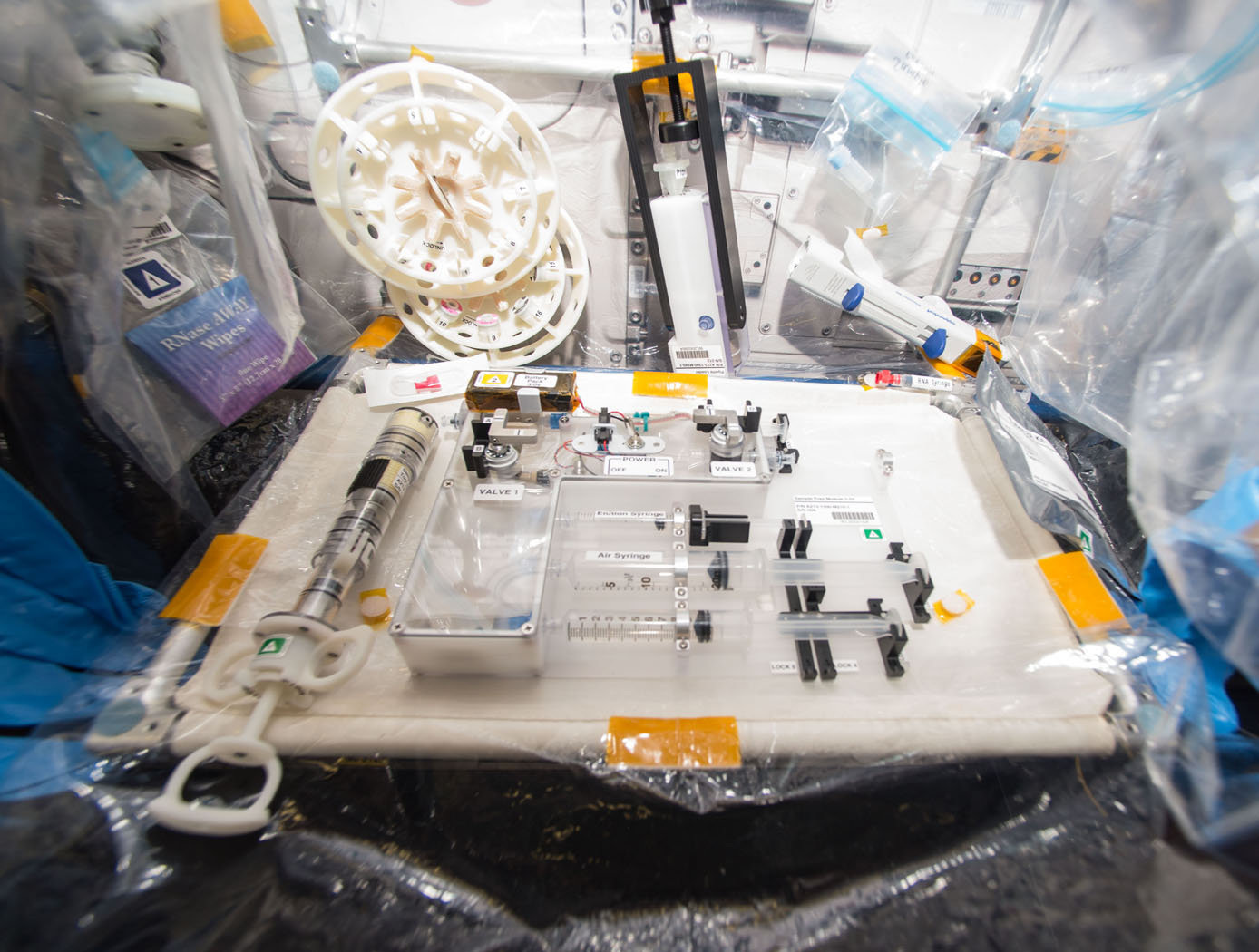
Rapid Nucleic Acid Isolation Method and Fluid Handling Devices
Gene expression analysis measures the activity of genes and reveals valuable information about the internal states of living cells. NASA Ames has developed a novel system for conducting quantitative, real-time gene expression analysis that not only significantly improves the sample preparation procedures and provides a quick, cost-effective solution needed in a laboratory, but also minimizes the risk of RNA contamination and degradation. The invention, a novel assay methodology and suite of devices have been developed to isolate nucleic acids from Prokaryotic and Eukaryotic cells and prepare samples for Reverse Transcriptase - quantitative Polymerase Chain Reaction (RT-qPCR) analysis.
The invention consists of a method to extract and purify nucleic acids from biospecimen that does not require organics or toxic chemicals, and provides containment for the liquids. The assay employs an aqueous-based non-alcohol method that yields robust RNA quality; and PCR reaction tubes that are pre-loaded with stabilized lyophilized reagents designed to perform RT-qPCR analysis - all in all enabling rapid, cost effective, and portable manual operation in the laboratory or remote field environments. This innovative technology greatly reduces preparation time to less than 10% of the time it would take using standard techniques. This technology could be used with any commercial quantitative Polymerase Chain Reaction (qPCR) machine.
Robotics Automation and Control

Regolith Utilization Multi-tool (RUM)
RUM's body provides a number of features designed to achieve effective performance in a number of tasks. These tools include a scoop, regolith storage compartment, a self-cleaning sieve, de-blinder mechanism, two shaker motors, a vibro-compactor surface, a grader blade, a rock removal pry bar, and a surface for geotechnical measurements. The top of the scoop body includes storage for sensors, and additional room for other features. RUM can also be outfitted with additional sensors, quick attachment mechanisms, and geotechnical testing tools. The bottom surface of RUM's excavator blade has a flat plate surface which is used primarily for compaction but can also be used to smooth surfaces. The capability to conduct compaction of in-situ soils up to and beyond 100% relative density is made possible by tunable, high-impact tamping and high-frequency vibrations (or any combination of the two).The sides of the scooping area are used when measuring bulk density and relative density, and allow for a smooth trench wall to be formed. RUM's blade edge can be used for rigorous tasks such as rock removal and prying.
Size screened regolith is required for both construction and ISRU operations, RUM has the capability and sort regolith below 1mm particle size at 10-40 grams per second without clogging. In addition to sorting regolith. RUM can measure soil shear using an attached grader blade, conduct pressure sinkage testing of regolith bearing and trafficability properties, regolith angle of repose, and regolith density using photogrammetry and known volume samples.
Information Technology and Software

Grid-Oriented Normalization for Analysis of Spherical Areas (GONASA)
NASA's GONASA technology is a mathematical formula / algorithm built around creating a grid composed of equal-area cells that span the entire visible hemisphere of a spherical object. Traditional longitude and latitude grids produce cells that diminish in size toward the poles due to convergence of longitudinal lines. GONASA circumvents this problem by carefully adjusting the latitude increments, resulting in a network of truly equal-area cells. This adjustment ensures that any feature observed on the spherical surface is accurately represented, regardless of its location.
To implement GONASA, the spherical surface is first segmented into discrete latitude bands or rings, each chosen to encompass an identical surface area. Within each ring, longitude divisions maintain equal cell areas, creating a uniform Cartesian grid. The result is a consistent, distortion-corrected matrix suitable for automatic computation, enabling simplified, efficient, and accurate measurements of spatial characteristics such as feature area, centroid location, perimeter, compactness, orientation, and aspect ratio.
GONASA grids are computationally efficient and readily adaptable to a range of data processing workflows, from spreadsheets to sophisticated data analysis frameworks like Pandas data frames in Python. Due to their consistent cell sizing and straightforward indexing, GONASA grids facilitate automation, enabling rapid, high-volume data processing and analysis, essential for modern remote sensing and planetary missions that require immediate, reliable data analysis in limited-bandwidth communications environments. At NASA, GONASA has already been successfully implemented to study images of Titan (e.g., mapping its clouds) taken by the Cassini space probe.
Aerospace

Method And System for Enhancing Vehicle Performance and Design Using Parametric Modeling and Gradient-Based Control Integration
The parametric modeling system allows for the integrated design and optimization of aerospace vehicles by unifying physical and control subsystems within a single computational model. The system includes representations of the vehicle’s geometry, structural load, propulsion, energy storage, and GNC systems. The system performs sensitivity analysis on key performance metrics (e.g., fuel consumption, heat load, and mechanical forces) to determine how changes in design parameters affect overall performance. By incorporating real-world conditions, such as wind variations and sensor noise, the system allows for the use of real-time feedback to refine vehicle designs. The optimization process uses a gradient-based algorithm to iteratively adjust parameters so that constraints such as structural integrity, thermal protection, and fuel capacity are met. The system generates a Pareto front representing trade-offs between performance metrics that allow engineers to visualize optimal designs for different mission profiles, which enhances design accuracy while reducing the need for expensive physical testing.
Sensors

Quantum Cascade Laser Source and Transceiver
The QCL source addresses the challenges of inefficiency, high power consumption, and bulky designs typically associated with existing solutions. It is fabricated with 80 to 100 alternating layers of semiconductor materials, each layer only a few microns thick. These layers create a cascade effect that amplifies terahertz-energy photon generation while consuming significantly less voltage. To mitigate the natural beam dissipation of QCLs, the source is integrated with a waveguide and thin optical antenna, reducing signal loss by 50%. Additionally, the waveguide employs a flared design with a diagonal feed horn, achieving high modal confinement and increasing beam coupling efficiency to 82%, compared to 37% in conventional setups. This compact design, smaller than a U.S. quarter, fits within payload constraints and enables high-powered terahertz beams for precise spectroscopic measurements.
The terahertz transceiver enhances measurement precision by integrating two back-to-back hybrid couplers and Schottky diodes as detectors, providing a 35 dB dynamic range. Operating in the 2.0–3.2 THz frequency range, the transceiver is optimized for versatility across astrophysics, heliophysics, and planetary science applications. It seamlessly couples the QCL-generated signal onto the waveguide, ensuring stable and accurate spectroscopic data collection. This compact and energy-efficient transceiver delivers exceptional sensitivity, enabling it to analyze planetary materials, atmospheric components, and interstellar phenomena with unmatched resolution.
With its compact, tunable design and high spectral resolution, the QCL source and transceiver represents a significant advancement for remote sensing and planetary surface characterization, offering a versatile solution for both NASA and commercial applications. The QCL system is at technology readiness level (TRL) 4 (component and/or breadboard validation in lab) and is available for patent licensing.
Mechanical and Fluid Systems
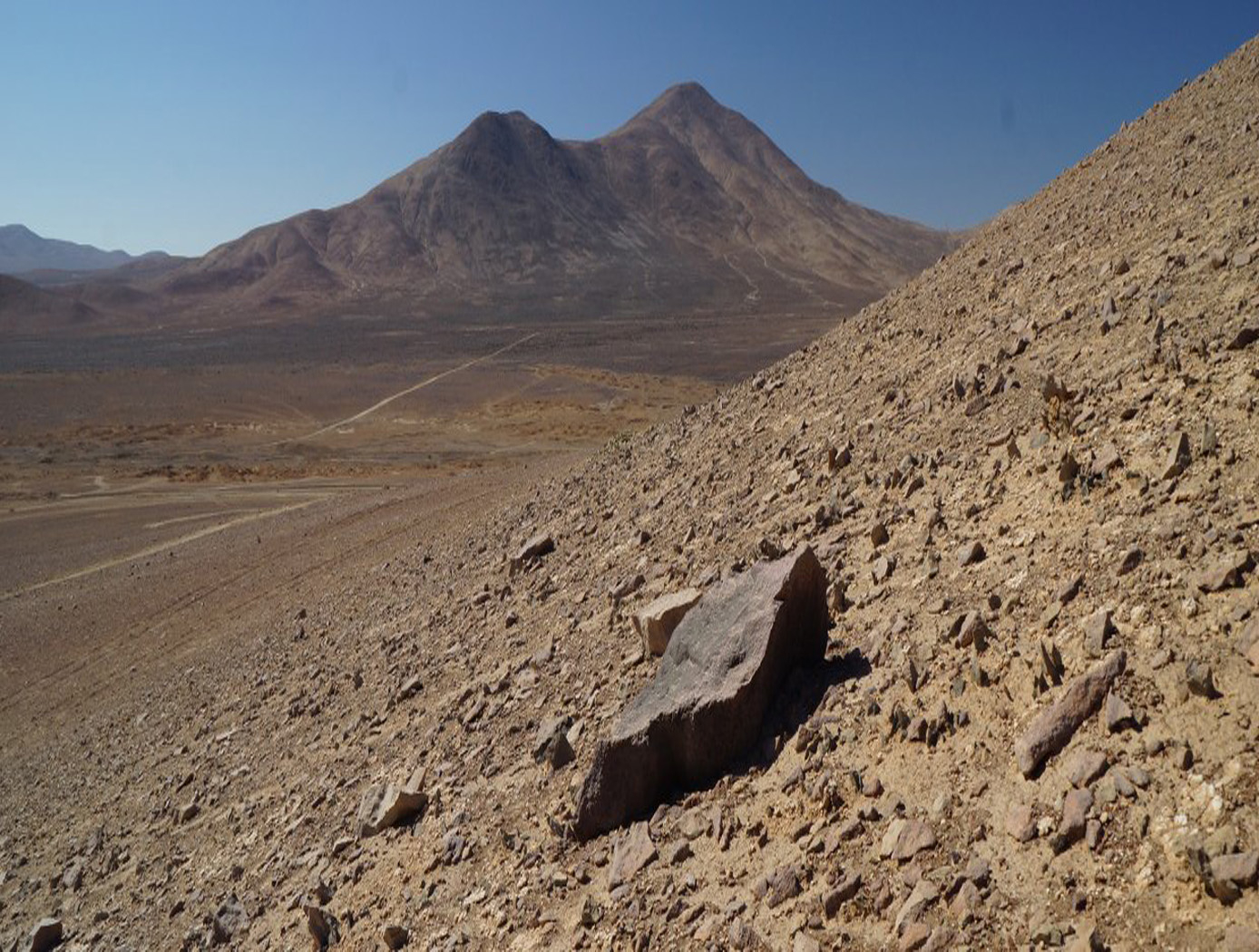
Extractor for Chemical Analysis of Lipid Biomarkers in Regolith (ExCALiBR)
The technology provides miniaturized techniques for extracting trace amounts of organic molecules (lipids) from natural samples. It operates as an autonomous, miniaturized fluidic system, integrating lab techniques for lipid analysis while minimizing reagent volumes and concentrating organics for analysis, thereby increasing signal-to-noise ratios by orders of magnitude. The non-aqueous fluidic system described herein for astrobiological and life-detection missions (either in situ or returned sample) is configured to extract lipid organics from regolith using (1) a fluidic sample processor made of materials compatible with organic solvents and (2) a machine-learning system to select processing steps and parameters to maximize lipid yield. A critical gap is bridged by integrating technologies into a system that replicates analytical lab procedures autonomously on a spaceflight instrument scale with fidelity to original lab techniques. Automated fluidic devices combine controlled handling of liquids with sequential operations and parallelization of replicate processes. By designing such systems to closely interface with both sample-delivery and analytical measurement systems, laboratory analyses are automated. The technology adapts best practice laboratory methods for lipid analysis, overcoming analytical challenges like low organic abundance, interference of minerals/salts, and degradation of origin-diagnostic molecular structures. The extraction and concentration techniques from rock/soil samples can be applied to any biomarkers by changing the solvent, temperature, and agitation.
Instrumentation

Lateral Flow Thin Layer Chromatography (LF TLC): Instrumentation to Enable In Situ Separation of Organics
This invention enhances the performance of the ExCALiBR (Extractor for Chemical Analysis of Lipid Biomarkers in Regolith) life detection instrument by introducing an improved method for performing thin layer chromatography (TLC) on unknown chemical samples to separate component chemicals for spectrometric analysis. The key feature of this system is enabling lateral flow TLC on a horizontally oriented plate within a sealed environment, in contrast with a typically upright configuration with one end of a TLC plate inserted into a solvent. It uses controlled heating and cooling to manage solvent condensation and evaporation, generating a continuous solvent flow that improves analyte separation. In this system, heating the TLC plate causes the solvent to evaporate, which in turn drives additional capillary flow toward the region where evaporation occurs. When this evaporation front reaches the end of the plate, the system enables the solvent to continue migrating beyond the point where it would normally stop. As a result, the analyte can continue to separate even after the initial solvent front has reached the plate’s physical boundary. The design also allows re concentration of diffused analyte bands and reversal of solvent flow direction to re separate bands that may have merged.
aerospace

Microscale Fire Calorimeter for Combustion and Toxicity Testing
Traditional fire testing methods often require large samples, open flames, or complicated setups to study combustion. This technology introduces a compact, precise method using a Microscale Fire Calorimeter (MFC) that mimics realistic fire conditions with unprecedented control. When a solid material is thermally decomposed (pyrolyzed), it emits gaseous byproducts. These gases are then premixed with oxygen and combusted in the MFC’s reaction zone at high temperatures, without a visible flame. The MFC system precisely regulates oxygen availability, simulating different fire stages such as over-ventilated (oxygen-rich) and under-ventilated (oxygen-poor) conditions. This allows researchers to analyze how combustion chemistry changes as fires become more intense or oxygen-deprived. The system captures and quantifies the resulting gases and soot, enabling evaluation of environmental pollutants and toxic species produced during each combustion phase. This approach supports safer, smaller-scale laboratory testing while providing valuable data for applications such as material development, regulatory compliance, and forensic analysis. It bridges the gap between benchtop research and real-world fire scenarios.
Optics

Filtered Ronchi Rulings for Enhanced Schlieren Imaging
The first optic is a 1D Ronchi ruling, where shortpass or longpass filters replace the traditional opaque lines in the grid pattern. The second optic is a 2D Ronchi ruling, where one set of lines is made from shortpass filters and the orthogonal set from longpass filters. By using two colors of light and a color camera in the focusing schlieren system (or a dichroic mirror with two monochrome cameras), the 1D optic enables simultaneous focusing schlieren and other co-linear techniques, while the 2D optic allows for the unambiguous measurement of two orthogonal density gradients in focusing schlieren images.
Unlike standard optical filters, which typically cover an entire substrate, these Ronchi rulings feature alternating clear and filtered regions in structured 1D or 2D patterns. By leveraging color filtering and a color camera, the 1D ruling enables simultaneous focusing schlieren and complementary optical diagnostics, such as Particle Image Velocimetry (PIV), Pressure-Sensitive Paint (PSP), and Thermal-Sensitive Paint (TSP). The 2D ruling enables simultaneous and unambiguous measurement of two orthogonal density gradients, a capability not possible with conventional Ronchi rulings. This advancement significantly improves the accuracy and efficiency of schlieren-based flow measurements. The types of filters are not just limited to shortpass and longpass coatings, but could include notch, bandpass, and multiple-bandpass filter coatings as well.
This design expands the utility of schlieren imaging in high-speed aerodynamics, combustion diagnostics, and other fluid dynamics applications. This Ronchi ruling methodology is at TRL 4 (component and/or breadboard validation in a lab environment) and is available for patent licensing.
Instrumentation

LED Intensity Decay Particle Tracking Velocimetry (PTV)
NASA’s LED-ID PTV system illuminates a seeded flow with an LED rather than a laser. Instead of using double-pulsed laser flashes to capture two separate images of particle positions, the system relies on the inherent intensity decay of an LED pulse to encode velocity information directly into a single long-exposure image. The LED’s light intensity decreases over time due to capacitor discharge characteristics of the driving circuit. This controlled decay serves as a built-in intensity marker, allowing for precise determination of particle velocity and directionality without requiring an actively modulated light source.
In a single-color configuration, a monochrome camera captures a long- exposure image of particle streaks as they move through the illuminated region. Because the light intensity is continuously decreasing, the recorded streaks naturally encode velocity information based on their brightness gradient. Faster-moving particles create longer streaks, while slower particles form shorter ones. The intensity variation across the streak provides additional data about directionality, enabling flow field analysis with a minimal hardware setup. For more complex flow analysis, a two-color configuration can be employed to track three- dimensional motion. In this setup, two LEDs of different colors are positioned adjacent to each other to create overlapping light sheets. A color camera, or two monochrome cameras with a dichroic mirror, captures the streaks of particles as they move between these sheets.
The color transition within a particle’s streak indicates its movement between the planes of illumination, allowing users to resolve out-of- plane velocity components. Image processing techniques (e.g., advanced algorithms, high-pass filtering methods, sub-interval streak segmentation) further enhance the system's accuracy.
NASA’s LED-ID PTV system has been prototyped and demonstrated with excellent results, and is available for patent licensing to industry.