Search
Power Generation and Storage

Cost-Effective DC Source Emulator for Microgrid Testing
The DC Source Emulator methodology combines impedance characterization, custom filter design, and external control implementation to replicate any DC power source using standard laboratory equipment. Engineers first identify the system requiring verification and determine the impedance characteristics of the power source at the interface through hardware testing, simulation, or circuit analysis. Using this impedance data, they design a filter network that matches the target characteristics as seen from the interface.
This custom filter connects to the output of a commercially available dynamic DC power supply or linear amplifier. External voltage and current sensing circuits work with external controllers to command the power supply output to respond identically to the physical hardware being emulated. The supply must be capable of changing its output voltage and current in response to external inputs. Transient load step response, impedance response, and ripple characteristics can all be verified to match the target system. Controllers such as PI or PID configurations command the supply output, capturing small signal response for minor variations and transient response for sudden changes. An optional ripple injection stage using an amplifier can be added for increased emulation accuracy.
Once configured, the emulated system can be tested for stability across all loading conditions without requiring actual power source hardware. The methodology shapes impedance on a target impedance plot while using high-bandwidth power supplies in either current or voltage mode. The same equipment can be dynamically reconfigured for different emulation targets by changing the output filter and controller parameters, making it highly adaptable across various DC power architectures including converters, batteries, fuel cells, and complex multi-source systems. The DC Source Emulator is available for patent licensing.
Manufacturing
X-Ray Crack Detectability
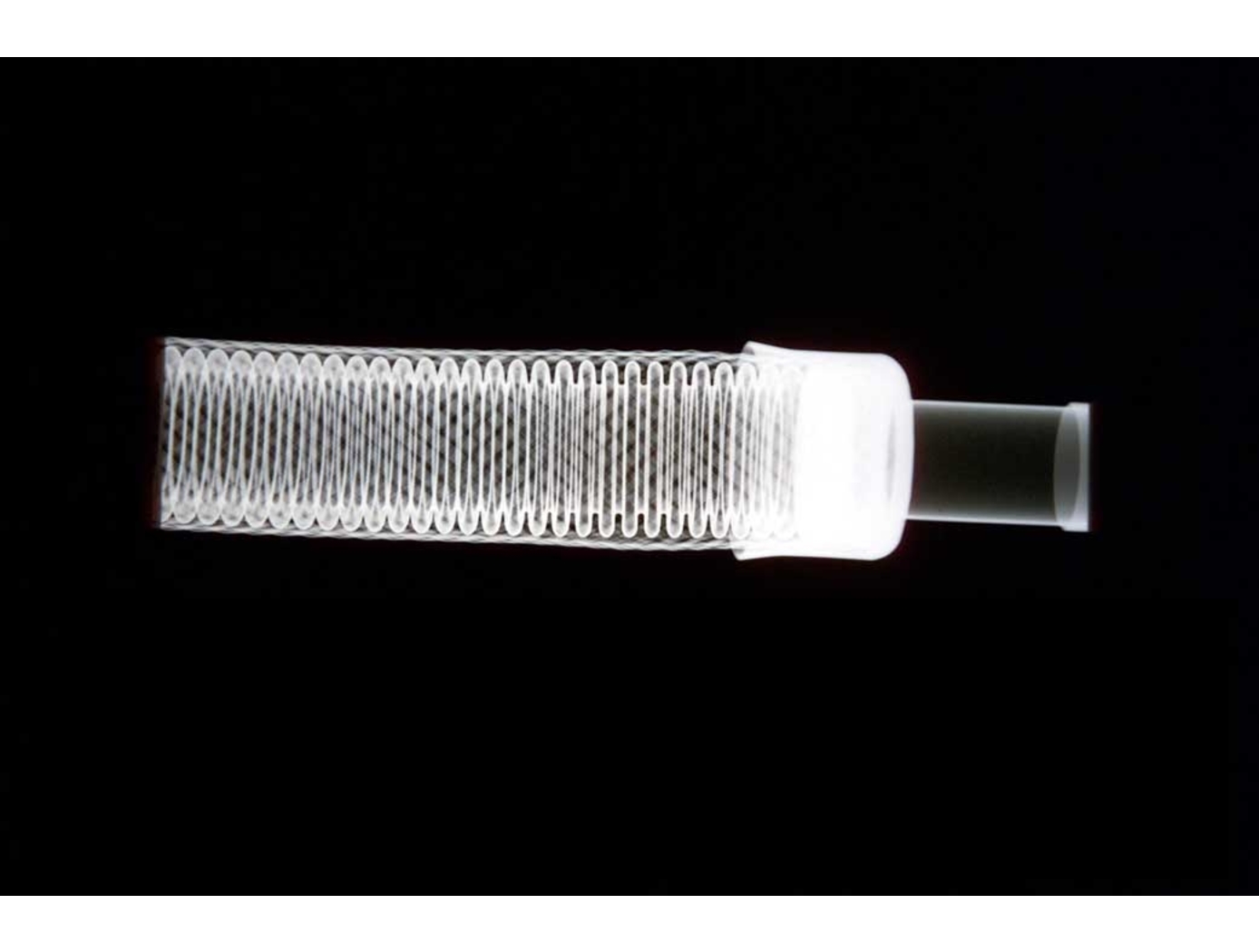
NASAs software technology uses an Image Quality Indicator (IQI)-based model that can predict whether cracks of a certain size can be detected, as well as a model that can provide appropriate conditions to optimize x-ray crack detection setup. Because this modeling software can predict minimum crack sizes that can be detected by a particular X-ray radiography testing setup, users can test various setups until the desired crack detection capabilities are achieved (predicted) by the modeling system.
These flaw size parameter models use a set of measured inputs, including thickness sensitivity, detector modulation transfer function, detector signal response function, and other setup geometry parameters, to predict the minimum crack sizes detectable by the testing setup and X-ray angle limits for detecting such flaws.
Current X-ray methods provide adequate control for detection of volumetric flaws but do not provide a high probability of detection (POD), and crack detection sensitivity cannot be verified for reliable detection. This results in reduced confidence in terms of crack detection. Given that these cracks, if undetected, can cause catastrophic failure in various systems (e.g., pressure vessels, etc.), verifying that X-ray radiography systems used for NDE can detect such cracks is of the utmost importance in many applications.
Power Generation and Storage

Triggering Li-ion Battery Cells with Laser Radiation
This technology is based upon a 120-watt IR laser is coupled to a fiber optic cable that is routed from the output of the laser into a series of focusing optics which directs energy onto a battery cell mounted to a test stand. When activated, heat from the laser penetrates the metal housing, heating the internals of the cell. At a specific temperature, the separator in the first few layers of the cell melts allowing the anode and cathode to make contact and initiates an internal short circuit. The internal short circuit then propagates throughout the battery eventually causing thermal runaway. The lower the wavelength of the laser used to produce the thermal runaway, the more heat-energy will be absorbed into the cell producing a faster result. The fiber optic cable can be terminated into a series of optics to focus the laser at a specific target, or the fiber optic cable can be stripped bare and placed next to the target to heat an isolated location. This method can also be used on a wide variety of cells, including Li-ion pouch cells, Li-ion cylindrical cells and Li-ion Large format cells.
The innovation Triggering Li-ion Cells with Laser Radiation is at TRL 6 (which means a system/subsystem prototype has been demonstrated in a relevant environment) and the related patent application is now available to license and develop into a commercial product. Please note that NASA does not manufacture products itself for commercial sale.